.png.bd9806eee33965a603c3a03374663758.png)
Leaderboard



Popular Content
Showing content with the highest reputation since 09/25/25 in Articles
-
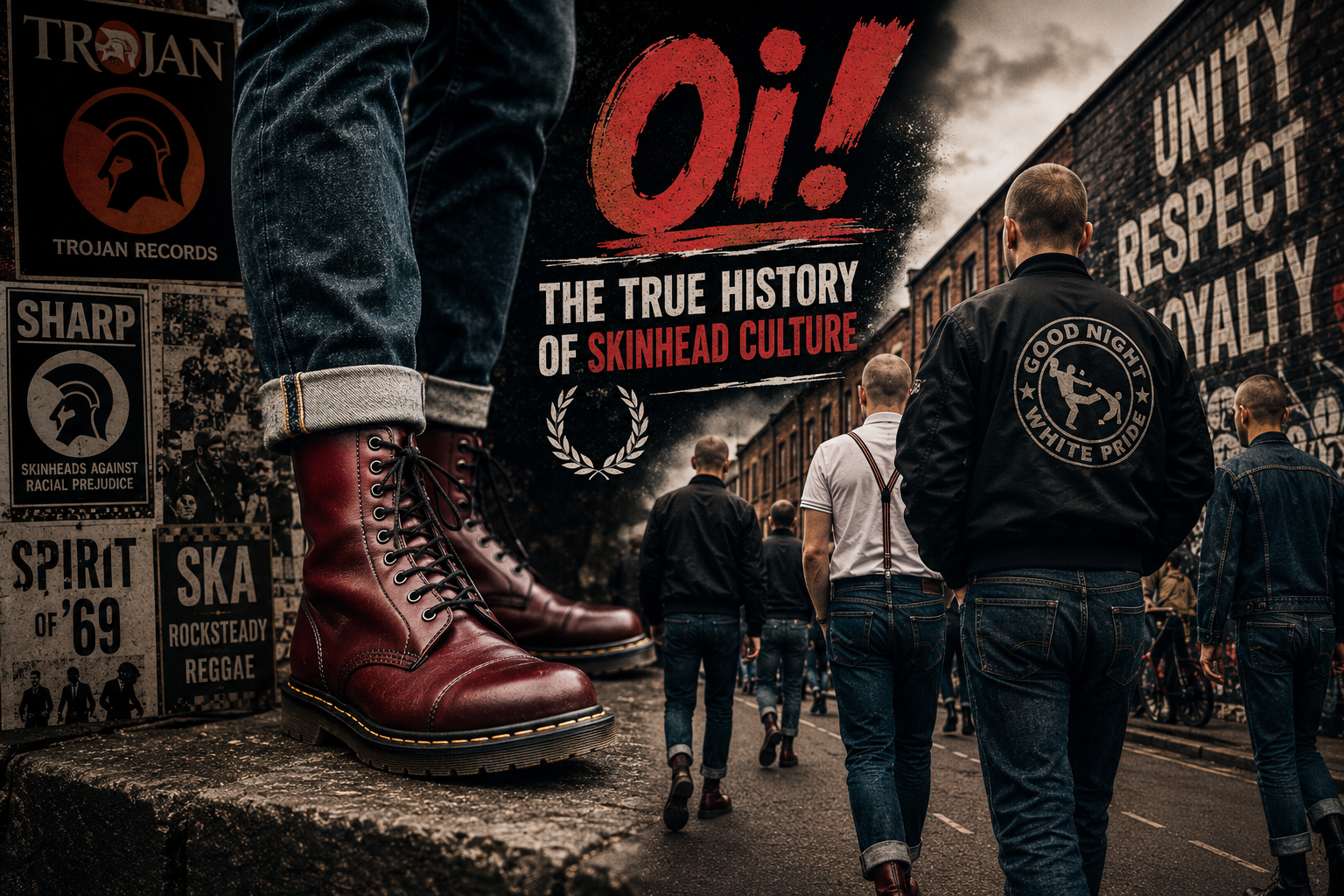
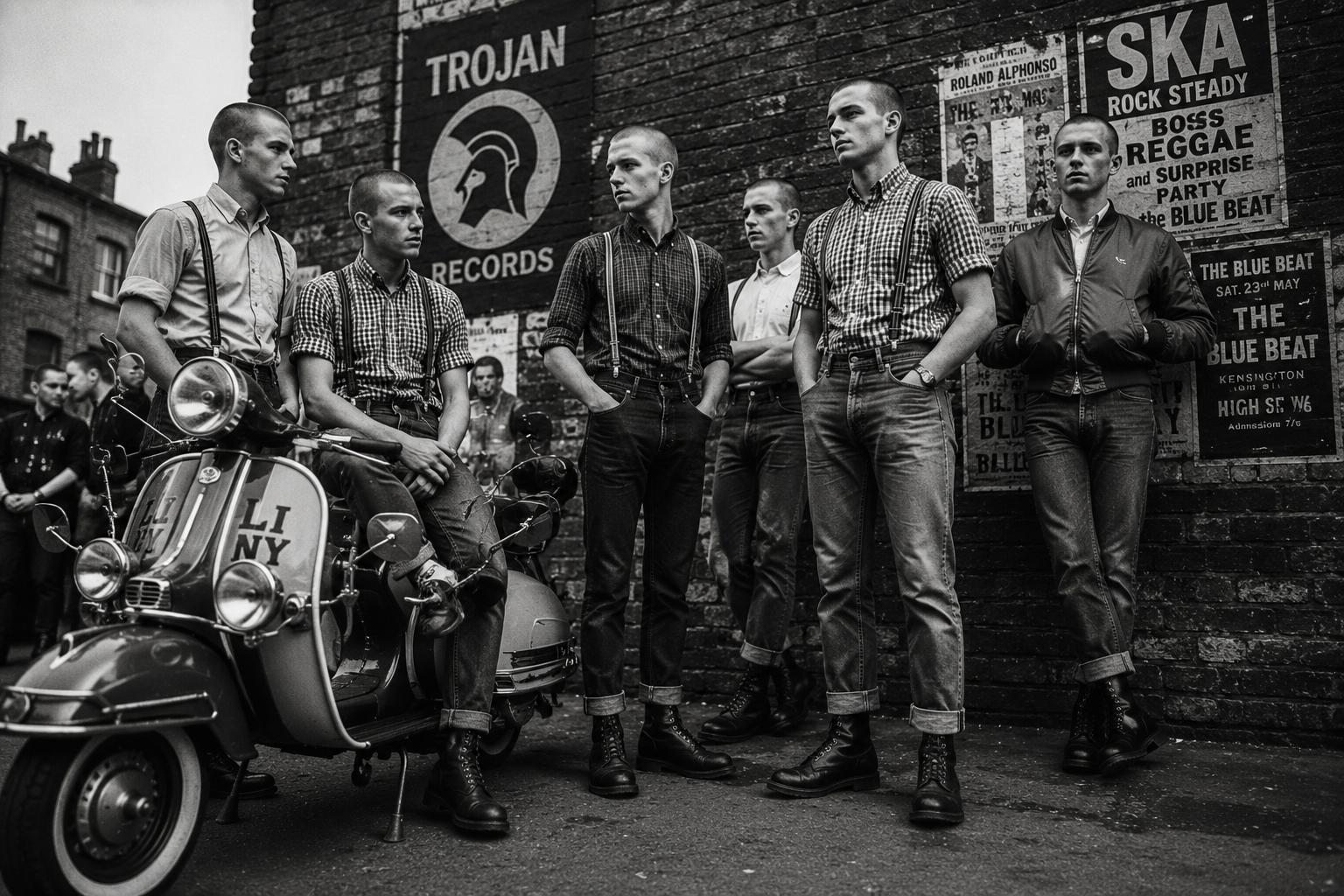 When people hear the word “skinhead,” many immediately think about violence, racism, or extremist politics. Yet the original traditional skinhead culture was something very different. Long before the media stereotypes and political hijacking, skinhead culture began as a proud working-class movement built around music, fashion, loyalty, and street identity. Traditional skinheads — often called “Trad Skins” — continue to preserve the original spirit of the culture that first emerged in Britain during the late 1960s. For many, it is not about politics at all, but about authenticity, brotherhood, music, and respect for the roots of the movement. The Origins of Traditional Skinhead Culture The skinhead movement first appeared in working-class areas of London around 1968 and 1969. It evolved from the earlier Mod scene while also taking heavy influence from Jamaican rude boy culture brought by Caribbean immigrants living in the UK. (en.wikipedia.org) Young British workers and Jamaican youths often shared the same neighborhoods, clubs, dance halls, and music scenes. This cultural crossover created a unique identity that mixed sharp British street fashion with Jamaican ska, rocksteady, reggae, and soul music. Traditional skinheads listened to artists released under labels such as Trojan Records, which became deeply associated with the scene. Music was not just entertainment — it was part of everyday life and identity. The Classic Style One of the most recognizable parts of traditional skinhead culture is the fashion. The style was practical, clean, and strongly connected to working-class life. Classic traditional skinhead fashion includes: Dr. Martens or combat boots Braces (suspenders) Straight-leg jeans with rolled cuffs Harrington or bomber jackets Polo shirts and button-up shirts Close-cropped or shaved hair The shaved hairstyle was originally practical for factory work and street life rather than political symbolism. Over time, the look became one of the most iconic youth styles in British subculture history. For traditional skinheads, style represents discipline, pride, and identity. It is not about expensive fashion brands, but about staying true to the roots of the culture. Spirit of ’69 Among traditional skinheads, the phrase “Spirit of ’69” represents the golden age of the movement. It refers to the late 1960s period when skinhead culture centered around music, friendship, football, pubs, scooters, and working-class solidarity. Many traditional skinheads see this era as the purest form of the culture before politics and extremist groups began damaging its public image. The “Spirit of ’69” remains important today because it reminds people that the original skinhead scene was multicultural and heavily connected to Black Jamaican music culture. Ska and reggae were central parts of the movement from the very beginning. Traditional Skinheads and Music Music has always been at the heart of traditional skinhead culture. Early skinheads danced to ska, rocksteady, reggae, soul, and later Oi! music during the late 1970s skinhead revival. Traditional skinheads often continue supporting: Ska Rocksteady Reggae Northern Soul Oi! Street Punk Bands like Symarip, The Specials, Madness, Cock Sparrer, and Sham 69 became closely associated with the scene across different generations. For many traditional skinheads, music is more important than politics. The culture survives through concerts, vinyl records, pubs, football culture, and underground gatherings worldwide. Rejecting Extremism One of the biggest misunderstandings surrounding skinhead culture is the belief that all skinheads are racist or extremist. In reality, many traditional skinheads strongly reject racism and political extremism. During the late 1970s and 1980s, far-right groups attempted to recruit within parts of the skinhead scene, creating the negative image that later dominated media coverage. However, many skinheads opposed this completely. Groups such as SHARP (Skinheads Against Racial Prejudice) emerged to defend the original multicultural roots of the movement and separate traditional skinhead culture from extremist politics. Even today, many traditional skinheads continue emphasizing unity, respect, loyalty, and working-class identity rather than political ideology. A Culture That Still Lives Although skinhead culture remains underground, traditional skinheads still exist worldwide. Scenes can be found across the UK, Europe, Southeast Asia, Japan, and Latin America. Modern traditional skinheads continue preserving the original spirit through music events, football culture, vintage fashion, vinyl collecting, and underground communities. For outsiders, the culture is often misunderstood because of decades of media stereotypes. But for those inside the scene, traditional skinhead culture is about much more than shaved heads or boots. It is about history, identity, loyalty, music, and pride in working-class roots. More than fifty years later, the Spirit of ’69 still survives — not through politics or headlines, but through the people who continue living the culture every day.1 point
 -
 For years, many people believed skinhead culture had faded into history. Yet across Europe, Asia, and underground punk scenes worldwide, a new generation is quietly reviving the spirit of traditional skinhead culture through music, fashion, and working-class identity. In recent years, Oi! music and classic skinhead style have seen a noticeable resurgence among younger punk fans. Modern bands influenced by old-school street punk, ska, and hardcore are attracting a new audience interested in the roots of the culture rather than political extremism. The Return of Oi! One of the clearest signs of this revival can be seen in the growing popularity of modern Oi! bands across Europe. In France, a movement often called “Cold Oi” has emerged, blending classic street punk energy with post-punk and coldwave influences. Bands such as Syndrome 81, Rancoeur, and Rixe have helped introduce Oi! music to a younger audience while maintaining its raw working-class identity. Unlike the aggressive political image often associated with the genre in the past, many modern bands focus more on everyday life, urban struggles, friendship, and underground culture. The sound remains loud, direct, and emotional — but with a more modern atmosphere influenced by post-punk and alternative music. The revival is not limited to Europe. Underground scenes in Asia, including Malaysia, Indonesia, Japan, and Singapore, continue to support traditional skinhead and street punk culture through gigs, independent labels, and DIY communities. Malaysia Still Represents Malaysia’s underground Oi! and street punk scene remains respected internationally. Recently, Malaysian Oi!/Street Punk band ACAB was announced for a London performance at the legendary Underworld Camden venue — marking a major moment for Southeast Asian skinhead and punk culture. For longtime fans, this shows that the Malaysian scene still carries influence beyond local borders. Bands from Southeast Asia continue to represent the raw energy and spirit that originally made Oi! culture powerful. Beyond The Stereotypes One major reason for the renewed interest in skinhead culture is a growing awareness that the original movement was never entirely about politics or racism. Historians and music writers increasingly highlight the multicultural roots of the scene, especially its strong connection to Jamaican ska, reggae, and rude boy culture. Traditional skinhead culture was originally built around music, fashion, working-class pride, football culture, and street identity. Early skinheads listened heavily to ska and reggae before Oi! music later became connected to the second wave during the punk era. This distinction has become important for many younger fans who want to separate classic skinhead culture from extremist groups that later tried to hijack the image. Social Media and the New Generation Platforms like Instagram, TikTok, YouTube, and online forums have also helped younger people discover vintage skinhead fashion, vinyl collections, ska music, and Oi! bands from the 1970s and 1980s. Rare footage, old gig posters, and classic Dr. Martens styles regularly circulate online, creating renewed interest in the culture’s aesthetic and history. Communities discussing Trojan Records, Spirit of ’69 culture, and SHARP (Skinheads Against Racial Prejudice) have also become more visible online. While modern skinhead culture remains underground, its influence is clearly returning through fashion, music, and youth identity. The boots, braces, shaved heads, and street anthems never truly disappeared — they simply evolved with a new generation. For many younger fans today, skinhead culture is no longer about old political headlines. Instead, it represents authenticity, music, loyalty, and working-class roots that continue to survive decades after the original Spirit of ’69.1 point
 -
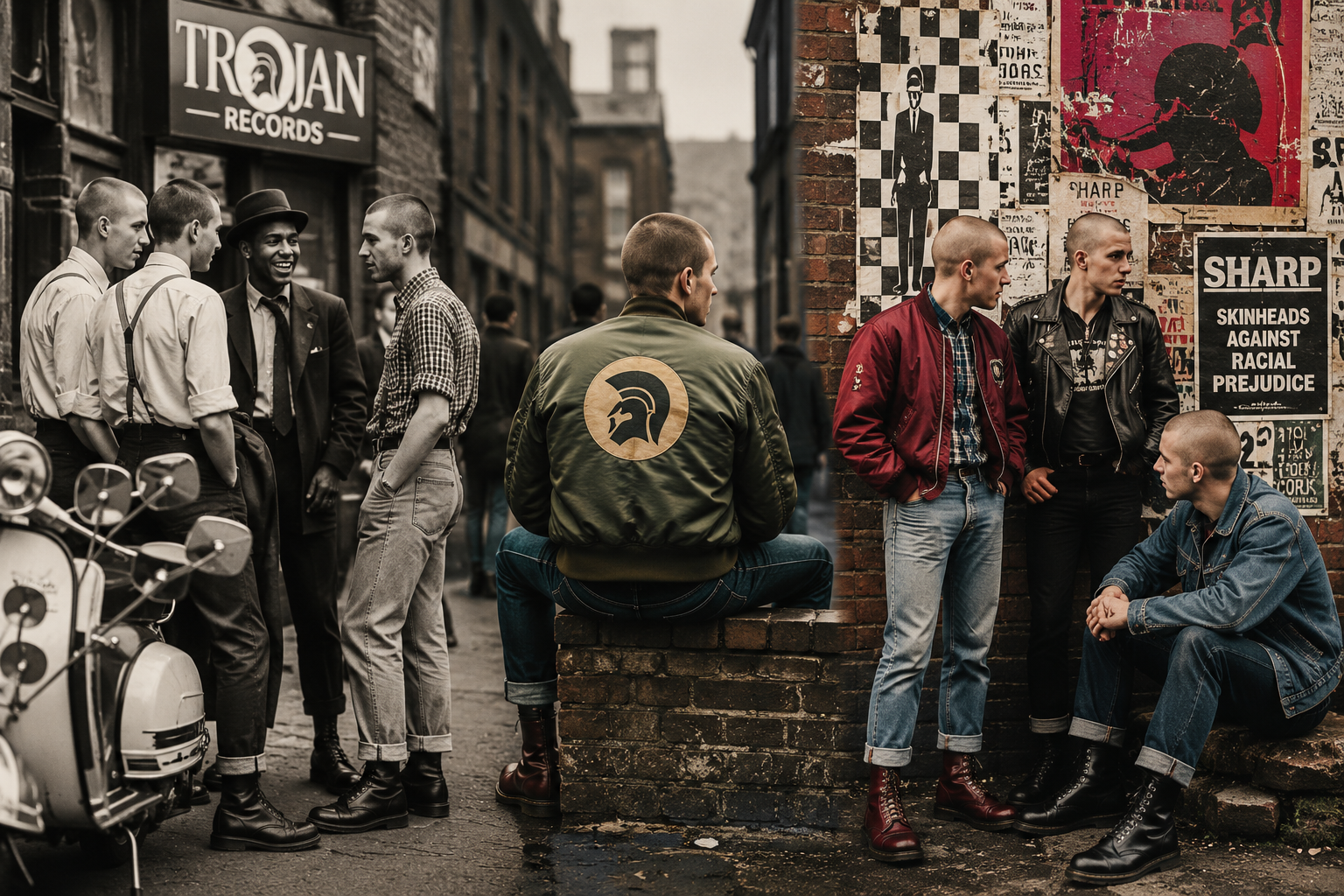 For decades, the word “skinhead” has been misunderstood by mainstream media and popular culture. Many people immediately associate the skinhead movement with racism, neo-Nazism, or violent extremism. However, the real history of skinhead culture tells a very different story — one rooted in working-class pride, multicultural unity, music, and street fashion. The original skinhead movement began in late 1960s Britain, particularly in working-class neighborhoods of London. It emerged from a mixture of British mod culture and Jamaican rude boy influence, creating a unique youth subculture that celebrated identity, music, and brotherhood. The Birth of the Skinhead Movement The first generation of skinheads were primarily working-class youths who rejected both upper-class conservatism and the hippie movement of the 1960s. Instead of embracing peace-and-love ideals, they built their own culture around sharp clothing, clean appearances, music, football culture, and life on the streets. One of the most important influences came from Jamaican immigrants living in the UK. British youths shared neighborhoods, clubs, dance halls, and music scenes with Jamaican communities, leading to the rise of a multicultural identity built around ska, rocksteady, reggae, and soul music. This connection is why early skinheads listened heavily to artists released under labels like Trojan Records, which became iconic within the scene. The classic skinhead style — Dr. Martens boots, rolled-up jeans, braces, Harrington jackets, and shaved hair — was inspired as much by Jamaican rude boys as British street fashion. Spirit of ’69 Among traditional skinheads, the phrase “Spirit of ’69” represents the golden era of the movement. It symbolizes the original skinhead identity before politics and extremism divided the culture. During this period, skinhead gatherings revolved around music, pubs, football, scooter culture, and working-class solidarity. Ska and reggae were central to the movement, proving that the early skinhead scene was deeply connected to Black music and multicultural influence. Contrary to modern stereotypes, many early skinheads saw themselves as apolitical or simply proud of their working-class roots. From Ska to Oi! By the late 1970s, Britain faced economic hardship, unemployment, and growing frustration among working-class youth. Around the same time, punk rock exploded across the UK, bringing raw energy and anti-establishment attitudes. Skinhead culture experienced a revival during this era and became closely connected to punk music. This led to the rise of Oi! music — a street-level form of punk rock focused on working-class life, friendship, football culture, pubs, and social frustration. Bands like Sham 69, Cock Sparrer, Cockney Rejects, and The 4-Skins became closely associated with the scene. Oi! music retained the spirit of working-class identity while mixing punk aggression with the communal energy of the original skinhead movement. At the same time, the 2 Tone ska revival helped reconnect skinhead culture with its Jamaican roots. Bands like The Specials and Madness combined ska rhythms with punk energy, promoting racial unity during a period of rising social tension in Britain. The Hijacking of the Image In the late 1970s and early 1980s, far-right political groups such as the National Front began targeting disillusioned youths within the skinhead scene. Some factions adopted racist ideologies, creating the image that would later dominate media coverage. However, many traditional skinheads rejected this direction completely. Anti-racist groups such as SHARP — Skinheads Against Racial Prejudice — were formed to reclaim the original spirit of skinhead culture and oppose neo-Nazi factions. SHARP members continued embracing ska, reggae, soul, Oi!, and working-class unity while rejecting racism and political extremism. The movement spread internationally and became an important part of preserving traditional skinhead identity. More Than a Stereotype Today, skinhead culture remains diverse and often misunderstood. While extremist groups did exist and gained media attention, they never represented the entire movement. Many skinheads worldwide continue to celebrate the original values of the culture: music, unity, style, loyalty, and working-class pride. The real history of skinhead culture is not simply a story about politics or violence. It is a story about multicultural Britain, Jamaican musical influence, youth identity, and the evolution of street culture from ska dance halls to Oi! punk concerts. From ska to Oi!, the skinhead movement remains one of the most influential — and misunderstood — subcultures in modern history.1 point
 -
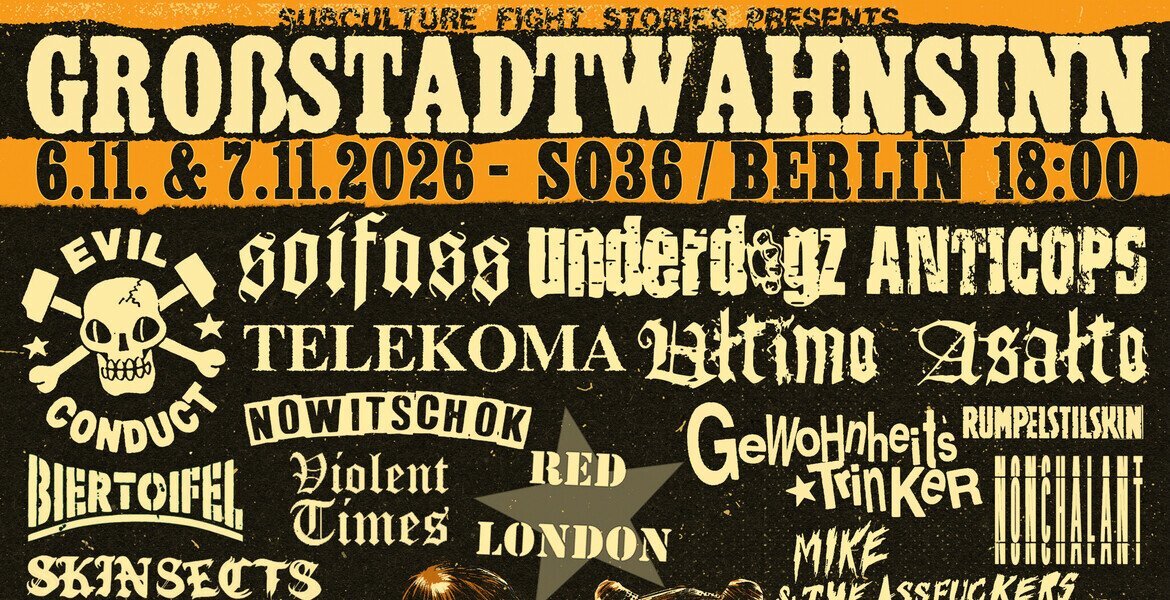 Bands: Evil Conduct Soifass Underdogz Anticops Telekoma Ultimo Asalto Biertoifel Nowitschok Gewohnheitstrinker Rumpelstilskin Nonchalant Violent Times Red London Skinsects Posterboiz Mike & The Assfuckers Location: SO36 & Franken Bar Date: 06.11. & 07.11.2026 Start Franken Bar: 16:30 Uhr Start SO36: 18:00 Uhr https://www.so36.com/produkte/91592-tickets-grossstadtwahnsinn-2026-festivalticket-so36-berlin-am-06-11-20261 point
 -
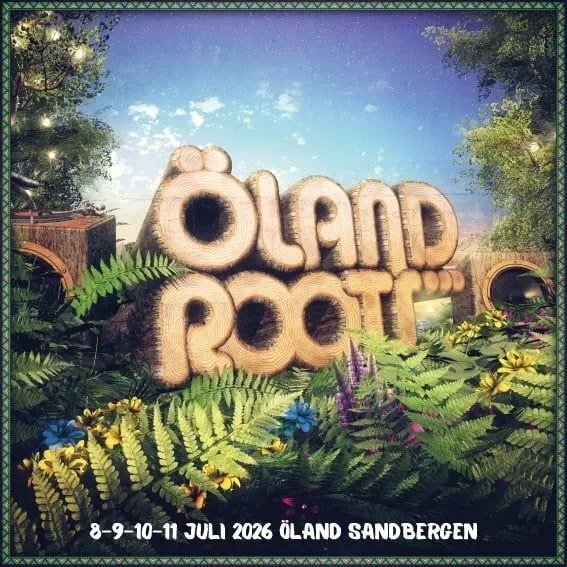 Swedens foremost festival for reggae, ska and creativity for skinheads, hippies and punks together - at the beautiful island of Öland! ÖLAND ROOTS ❤ ROOTVÄLTA Rootvälta reunites and will perform at Öland Roots this summer! After Rootvälta announced in 2016 that the band was taking an indefinite timeout, the joyful news that many have been waiting for has recently arrived – Rootvälta is reuniting and will this summer perform, among other things, a long-awaited show at Öland Roots. Rootvälta is one of the most established names in Swedish reggae and has been a natural part of the reggae scene since the late 1980s. Originating from Borlänge, the band has, for more than three decades, built a strong reputation, not least thanks to their energetic live performances and their genuine roots reggae sound. They have released several acclaimed albums and performed at many of Sweden's largest festivals, with recurring appearances at Öland Roots being a natural part of their journey. The band has also toured internationally, with performances in places including Jamaica and the USA. something that left clear marks on both music and expression. Rootvälta is a live band in the truest sense of the word. With a warm, organic sound, heavy roots reggae, and a strong presence that engages the audience from the first to the last note. A band that continues to unite generations of reggae lovers on festival stages around the country. Link to tickets and more info: https://olandroots.ticketco.events/se/sv LOVE SOLIDARITY AWARENESS For info (3) Facebook REGULAR TICKETS FOR ÖLAND ROOTS 2026 - 100 YEARS OF DANCE IN SANDBERGEN ARE NOW RELEASED! On July 8-11, it's time again. This year the dance floor also turns 100 years old! In addition to the loving festival we are used to with heavy backing and inspiring workshops, the dance floor's 100-year history will take place. The Main Stage is filled with both international bands and sought-after Swedish artists. STRANDSCENEN offers dawn dancing at the water's edge. The CHILDREN's CAMPSITE will be twice as large, so that even the smallest festival visitors and families will have a cozy and safe festival experience in true Öland Roots spirit! Please note that this year you need a specific ticket to be able to stay at the children's campsite and that everyone under the age of 15 must stay at the children's campsite with at least one adult. The children's campsite is also alcohol-free. Children 0-7 years old do not need a ticket to visit the festival. 1-day tickets will be released at a later date. LOVE, SOLIDARITY, CONSCIOUSNESS1 point
 -
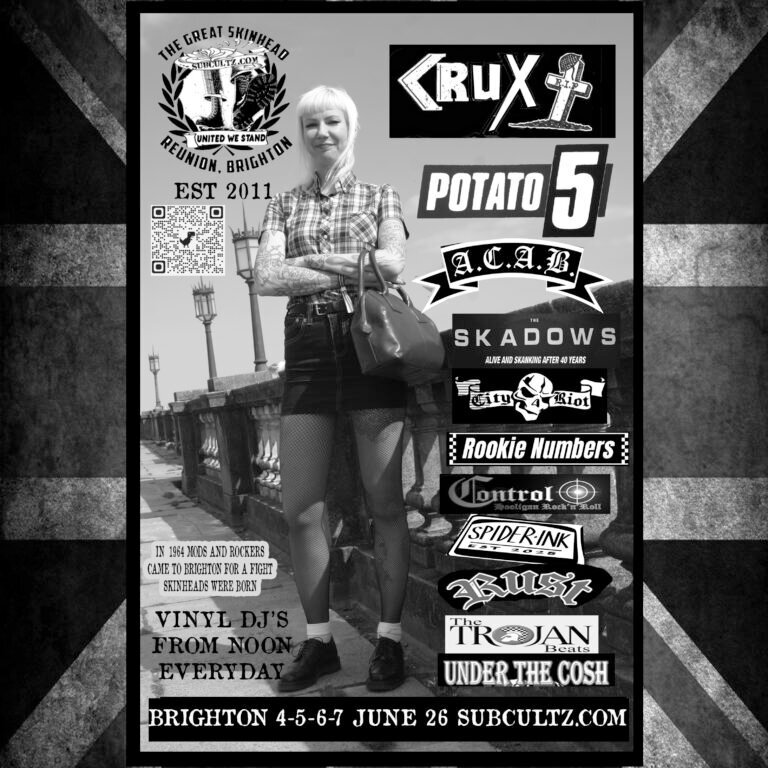 THE GREAT SKINHEAD REUNION JUNE 2026 This ticket covers Thursday afternoon BBQ Friday-Saturday and Sunday There is an added pre event beach BBQ, DJ night and some more surprises for Thursday Band Line up so far confirmed for 2026 POTATO 5 SKADOWS CONTROL RUST (Australia) ACAB (Malaysia) CITY RIOT (Netherlands ) SPIDER INK (Native American) TROJAN BEATS . UNDER THE COSH 4 NIGHT EVENT INCLUDING A PRE PARTY BEACH BBQ. THEN 3 NIGHTS UP TO 15 BANDS, 12 DJ’S AND SKINHEADS FROM ACROSS THE GLOBE. THE WORLD OF SKINHEADS VENUE LOCATION VOLKS BAR, MADEIRA DRIVE. BRIGHTON BN2 1PS To avoid commission charges use friends and family option on PayPal subcultz@gmail.com Or contact us for other methods including bank transfer Rooms subject to availability Check out The Charm Brighton Boutique Hotel & Spa on Booking.com! https://www.booking.com/Share-tXaY51 Seaspray Hotel Brighton https://www.booking.com/Share-cMo8Cxh Check price and then discount 10%. And we can book directly with owners. Please contact me if you are interested Symond WhatsApp +447733096571 subcultz@gmail.com (Tickets are non refundable unless event is cancelled by the promoter)1 point
This leaderboard is set to Kuala Lumpur/GMT+08:00


