.png.bd9806eee33965a603c3a03374663758.png)

When people hear the word “skinhead,” many immediately think about violence, racism, or extremist politics. Yet the original traditional skinhead culture was something very different. Long before the media stereotypes and political hijacking, skinhead culture began as a proud working-class movement built around music, fashion, loyalty, and street identity.
Traditional skinheads — often called “Trad Skins” — continue to preserve the original spirit of the culture that first emerged in Britain during the late 1960s. For many, it is not about politics at all, but about authenticity, brotherhood, music, and respect for the roots of the movement.
The Origins of Traditional Skinhead Culture
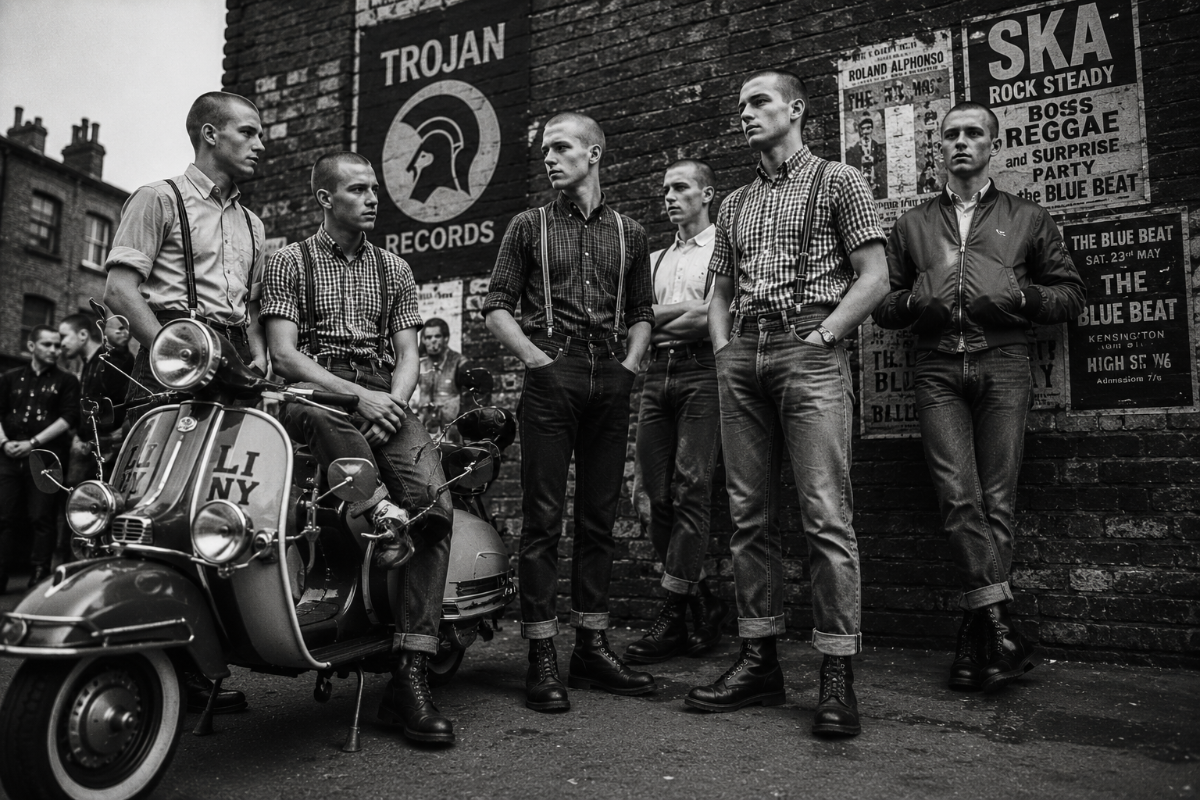
The skinhead movement first appeared in working-class areas of London around 1968 and 1969. It evolved from the earlier Mod scene while also taking heavy influence from Jamaican rude boy culture brought by Caribbean immigrants living in the UK. (en.wikipedia.org)
Young British workers and Jamaican youths often shared the same neighborhoods, clubs, dance halls, and music scenes. This cultural crossover created a unique identity that mixed sharp British street fashion with Jamaican ska, rocksteady, reggae, and soul music.
Traditional skinheads listened to artists released under labels such as Trojan Records, which became deeply associated with the scene. Music was not just entertainment — it was part of everyday life and identity.
The Classic Style
One of the most recognizable parts of traditional skinhead culture is the fashion. The style was practical, clean, and strongly connected to working-class life.
Classic traditional skinhead fashion includes:
- Dr. Martens or combat boots
- Braces (suspenders)
- Straight-leg jeans with rolled cuffs
- Harrington or bomber jackets
- Polo shirts and button-up shirts
- Close-cropped or shaved hair
The shaved hairstyle was originally practical for factory work and street life rather than political symbolism. Over time, the look became one of the most iconic youth styles in British subculture history.
For traditional skinheads, style represents discipline, pride, and identity. It is not about expensive fashion brands, but about staying true to the roots of the culture.
Spirit of ’69
Among traditional skinheads, the phrase “Spirit of ’69” represents the golden age of the movement. It refers to the late 1960s period when skinhead culture centered around music, friendship, football, pubs, scooters, and working-class solidarity.
Many traditional skinheads see this era as the purest form of the culture before politics and extremist groups began damaging its public image.
The “Spirit of ’69” remains important today because it reminds people that the original skinhead scene was multicultural and heavily connected to Black Jamaican music culture. Ska and reggae were central parts of the movement from the very beginning.
Traditional Skinheads and Music
Music has always been at the heart of traditional skinhead culture. Early skinheads danced to ska, rocksteady, reggae, soul, and later Oi! music during the late 1970s skinhead revival.
Traditional skinheads often continue supporting:
- Ska
- Rocksteady
- Reggae
- Northern Soul
- Oi!
- Street Punk
Bands like Symarip, The Specials, Madness, Cock Sparrer, and Sham 69 became closely associated with the scene across different generations.
For many traditional skinheads, music is more important than politics. The culture survives through concerts, vinyl records, pubs, football culture, and underground gatherings worldwide.
Rejecting Extremism
One of the biggest misunderstandings surrounding skinhead culture is the belief that all skinheads are racist or extremist. In reality, many traditional skinheads strongly reject racism and political extremism.
During the late 1970s and 1980s, far-right groups attempted to recruit within parts of the skinhead scene, creating the negative image that later dominated media coverage. However, many skinheads opposed this completely.
Groups such as SHARP (Skinheads Against Racial Prejudice) emerged to defend the original multicultural roots of the movement and separate traditional skinhead culture from extremist politics.
Even today, many traditional skinheads continue emphasizing unity, respect, loyalty, and working-class identity rather than political ideology.
A Culture That Still Lives
Although skinhead culture remains underground, traditional skinheads still exist worldwide. Scenes can be found across the UK, Europe, Southeast Asia, Japan, and Latin America.
Modern traditional skinheads continue preserving the original spirit through music events, football culture, vintage fashion, vinyl collecting, and underground communities.
For outsiders, the culture is often misunderstood because of decades of media stereotypes. But for those inside the scene, traditional skinhead culture is about much more than shaved heads or boots. It is about history, identity, loyalty, music, and pride in working-class roots.
More than fifty years later, the Spirit of ’69 still survives — not through politics or headlines, but through the people who continue living the culture every day.


























Recommended Comments
Join the conversation
You can post now and register later. If you have an account, sign in now to post with your account.