.png.bd9806eee33965a603c3a03374663758.png)

Joe Hawkin
-
Posts
51 -
Joined
-
Last visited
-
Days Won
6
Content Type
Profiles
Forums
Blogs
Store
Gallery
Articles
Events
Videos
Everything posted by Joe Hawkin
-
-
 From the album A Skinhead‘s pride part I Release date: december 16th, 2022 Label: KB-Records Order link: www.oi-the-shop.com Lyrics: Here´s a story of some sinners,that somehow made it through Once the losers now the winners, Martens Army Skinhead Crew So by now people know our name, cause we always took the blame Proud to be the best of the worst ones and we never feel ashamed Chorus: We´ve never changed our minds Never changed our fucking minds We´ve never betrayed our lives Never betrayed our fucking lives We are violent, thirsty and out of control We are Skins and playing Skinhead Rock´n`Roll We never really had a chance to be heard what can I say If you´re playing in the grey zone you´ll be canceled anyway But don´t pretend to be somebody, just be yourself with pride Go ahead fight everybody if you gotta do what´s right Today you´ll find us on the top, looking down to all the rest We´re the cream of the crop That´s right motherfucker We are the best! Evil grin, fake human kindness but balls as big as bells You can call us our highness and kiss our ass as well
 -
im here too, forum is different from social media, quite agree with @ Belon maybe the skinhead scene is not like when it at peak, most of us are adult and have our own life and seldomly use the internet, because we are busy with life and most of my crew always meet each other in real life, drinking and eating at the cafe.
-
Traditional Skinhead: The Original Spirit of Working-Class Culture
Joe Hawkin posted an article in News
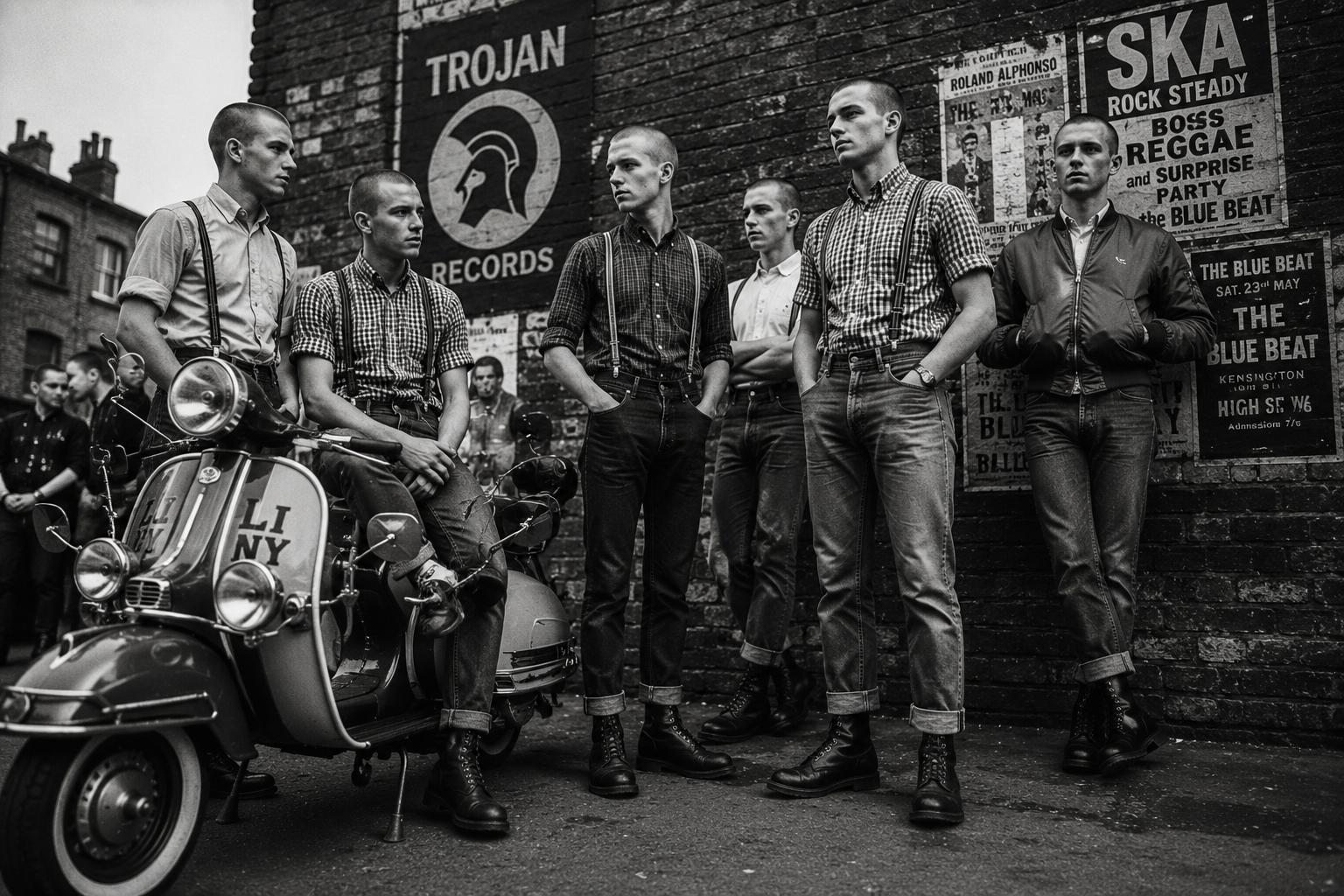 When people hear the word “skinhead,” many immediately think about violence, racism, or extremist politics. Yet the original traditional skinhead culture was something very different. Long before the media stereotypes and political hijacking, skinhead culture began as a proud working-class movement built around music, fashion, loyalty, and street identity. Traditional skinheads — often called “Trad Skins” — continue to preserve the original spirit of the culture that first emerged in Britain during the late 1960s. For many, it is not about politics at all, but about authenticity, brotherhood, music, and respect for the roots of the movement. The Origins of Traditional Skinhead Culture The skinhead movement first appeared in working-class areas of London around 1968 and 1969. It evolved from the earlier Mod scene while also taking heavy influence from Jamaican rude boy culture brought by Caribbean immigrants living in the UK. (en.wikipedia.org) Young British workers and Jamaican youths often shared the same neighborhoods, clubs, dance halls, and music scenes. This cultural crossover created a unique identity that mixed sharp British street fashion with Jamaican ska, rocksteady, reggae, and soul music. Traditional skinheads listened to artists released under labels such as Trojan Records, which became deeply associated with the scene. Music was not just entertainment — it was part of everyday life and identity. The Classic Style One of the most recognizable parts of traditional skinhead culture is the fashion. The style was practical, clean, and strongly connected to working-class life. Classic traditional skinhead fashion includes: Dr. Martens or combat boots Braces (suspenders) Straight-leg jeans with rolled cuffs Harrington or bomber jackets Polo shirts and button-up shirts Close-cropped or shaved hair The shaved hairstyle was originally practical for factory work and street life rather than political symbolism. Over time, the look became one of the most iconic youth styles in British subculture history. For traditional skinheads, style represents discipline, pride, and identity. It is not about expensive fashion brands, but about staying true to the roots of the culture. Spirit of ’69 Among traditional skinheads, the phrase “Spirit of ’69” represents the golden age of the movement. It refers to the late 1960s period when skinhead culture centered around music, friendship, football, pubs, scooters, and working-class solidarity. Many traditional skinheads see this era as the purest form of the culture before politics and extremist groups began damaging its public image. The “Spirit of ’69” remains important today because it reminds people that the original skinhead scene was multicultural and heavily connected to Black Jamaican music culture. Ska and reggae were central parts of the movement from the very beginning. Traditional Skinheads and Music Music has always been at the heart of traditional skinhead culture. Early skinheads danced to ska, rocksteady, reggae, soul, and later Oi! music during the late 1970s skinhead revival. Traditional skinheads often continue supporting: Ska Rocksteady Reggae Northern Soul Oi! Street Punk Bands like Symarip, The Specials, Madness, Cock Sparrer, and Sham 69 became closely associated with the scene across different generations. For many traditional skinheads, music is more important than politics. The culture survives through concerts, vinyl records, pubs, football culture, and underground gatherings worldwide. Rejecting Extremism One of the biggest misunderstandings surrounding skinhead culture is the belief that all skinheads are racist or extremist. In reality, many traditional skinheads strongly reject racism and political extremism. During the late 1970s and 1980s, far-right groups attempted to recruit within parts of the skinhead scene, creating the negative image that later dominated media coverage. However, many skinheads opposed this completely. Groups such as SHARP (Skinheads Against Racial Prejudice) emerged to defend the original multicultural roots of the movement and separate traditional skinhead culture from extremist politics. Even today, many traditional skinheads continue emphasizing unity, respect, loyalty, and working-class identity rather than political ideology. A Culture That Still Lives Although skinhead culture remains underground, traditional skinheads still exist worldwide. Scenes can be found across the UK, Europe, Southeast Asia, Japan, and Latin America. Modern traditional skinheads continue preserving the original spirit through music events, football culture, vintage fashion, vinyl collecting, and underground communities. For outsiders, the culture is often misunderstood because of decades of media stereotypes. But for those inside the scene, traditional skinhead culture is about much more than shaved heads or boots. It is about history, identity, loyalty, music, and pride in working-class roots. More than fifty years later, the Spirit of ’69 still survives — not through politics or headlines, but through the people who continue living the culture every day.
 -
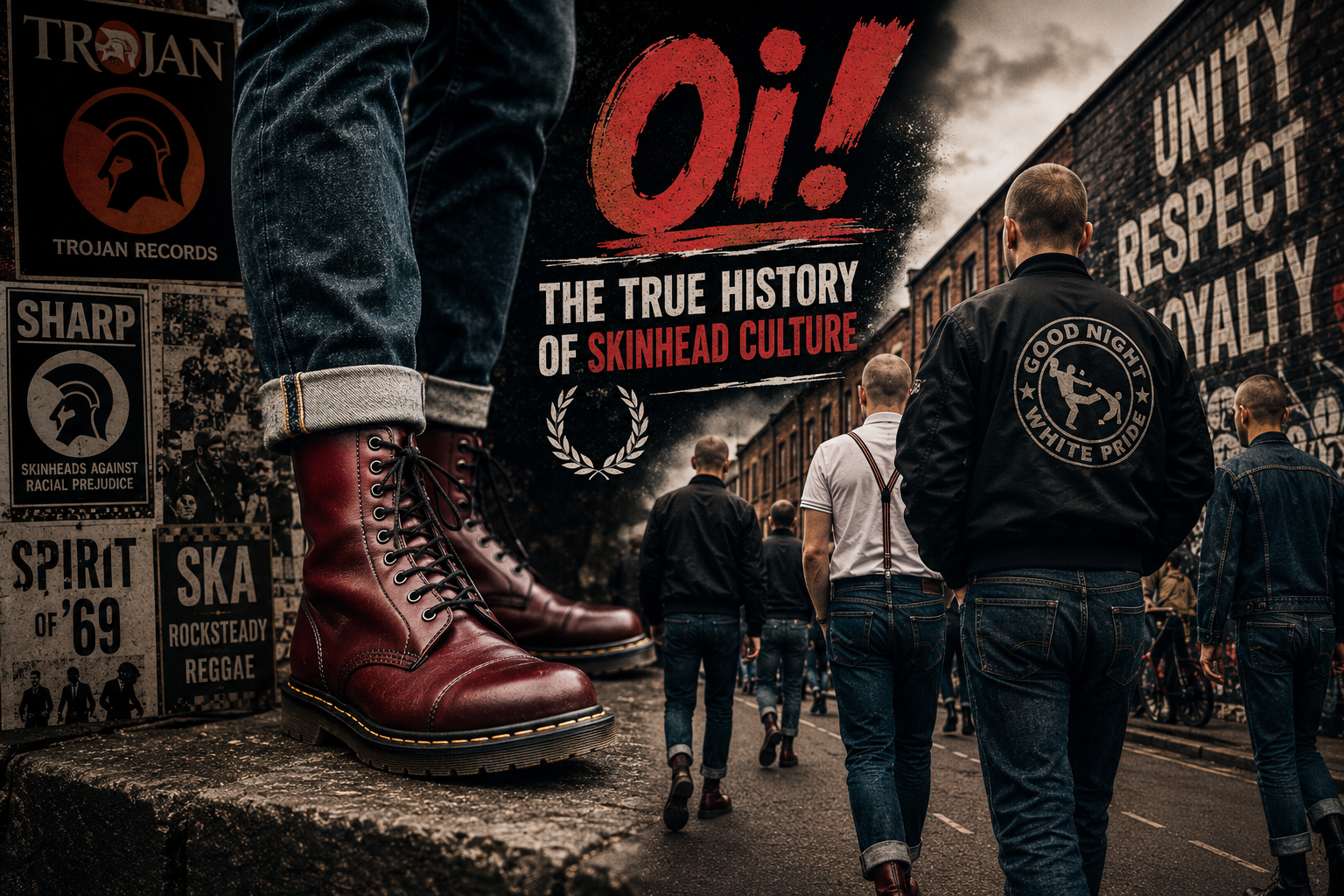 For years, many people believed skinhead culture had faded into history. Yet across Europe, Asia, and underground punk scenes worldwide, a new generation is quietly reviving the spirit of traditional skinhead culture through music, fashion, and working-class identity. In recent years, Oi! music and classic skinhead style have seen a noticeable resurgence among younger punk fans. Modern bands influenced by old-school street punk, ska, and hardcore are attracting a new audience interested in the roots of the culture rather than political extremism. The Return of Oi! One of the clearest signs of this revival can be seen in the growing popularity of modern Oi! bands across Europe. In France, a movement often called “Cold Oi” has emerged, blending classic street punk energy with post-punk and coldwave influences. Bands such as Syndrome 81, Rancoeur, and Rixe have helped introduce Oi! music to a younger audience while maintaining its raw working-class identity. Unlike the aggressive political image often associated with the genre in the past, many modern bands focus more on everyday life, urban struggles, friendship, and underground culture. The sound remains loud, direct, and emotional — but with a more modern atmosphere influenced by post-punk and alternative music. The revival is not limited to Europe. Underground scenes in Asia, including Malaysia, Indonesia, Japan, and Singapore, continue to support traditional skinhead and street punk culture through gigs, independent labels, and DIY communities. Malaysia Still Represents Malaysia’s underground Oi! and street punk scene remains respected internationally. Recently, Malaysian Oi!/Street Punk band ACAB was announced for a London performance at the legendary Underworld Camden venue — marking a major moment for Southeast Asian skinhead and punk culture. For longtime fans, this shows that the Malaysian scene still carries influence beyond local borders. Bands from Southeast Asia continue to represent the raw energy and spirit that originally made Oi! culture powerful. Beyond The Stereotypes One major reason for the renewed interest in skinhead culture is a growing awareness that the original movement was never entirely about politics or racism. Historians and music writers increasingly highlight the multicultural roots of the scene, especially its strong connection to Jamaican ska, reggae, and rude boy culture. Traditional skinhead culture was originally built around music, fashion, working-class pride, football culture, and street identity. Early skinheads listened heavily to ska and reggae before Oi! music later became connected to the second wave during the punk era. This distinction has become important for many younger fans who want to separate classic skinhead culture from extremist groups that later tried to hijack the image. Social Media and the New Generation Platforms like Instagram, TikTok, YouTube, and online forums have also helped younger people discover vintage skinhead fashion, vinyl collections, ska music, and Oi! bands from the 1970s and 1980s. Rare footage, old gig posters, and classic Dr. Martens styles regularly circulate online, creating renewed interest in the culture’s aesthetic and history. Communities discussing Trojan Records, Spirit of ’69 culture, and SHARP (Skinheads Against Racial Prejudice) have also become more visible online. While modern skinhead culture remains underground, its influence is clearly returning through fashion, music, and youth identity. The boots, braces, shaved heads, and street anthems never truly disappeared — they simply evolved with a new generation. For many younger fans today, skinhead culture is no longer about old political headlines. Instead, it represents authenticity, music, loyalty, and working-class roots that continue to survive decades after the original Spirit of ’69.
 -
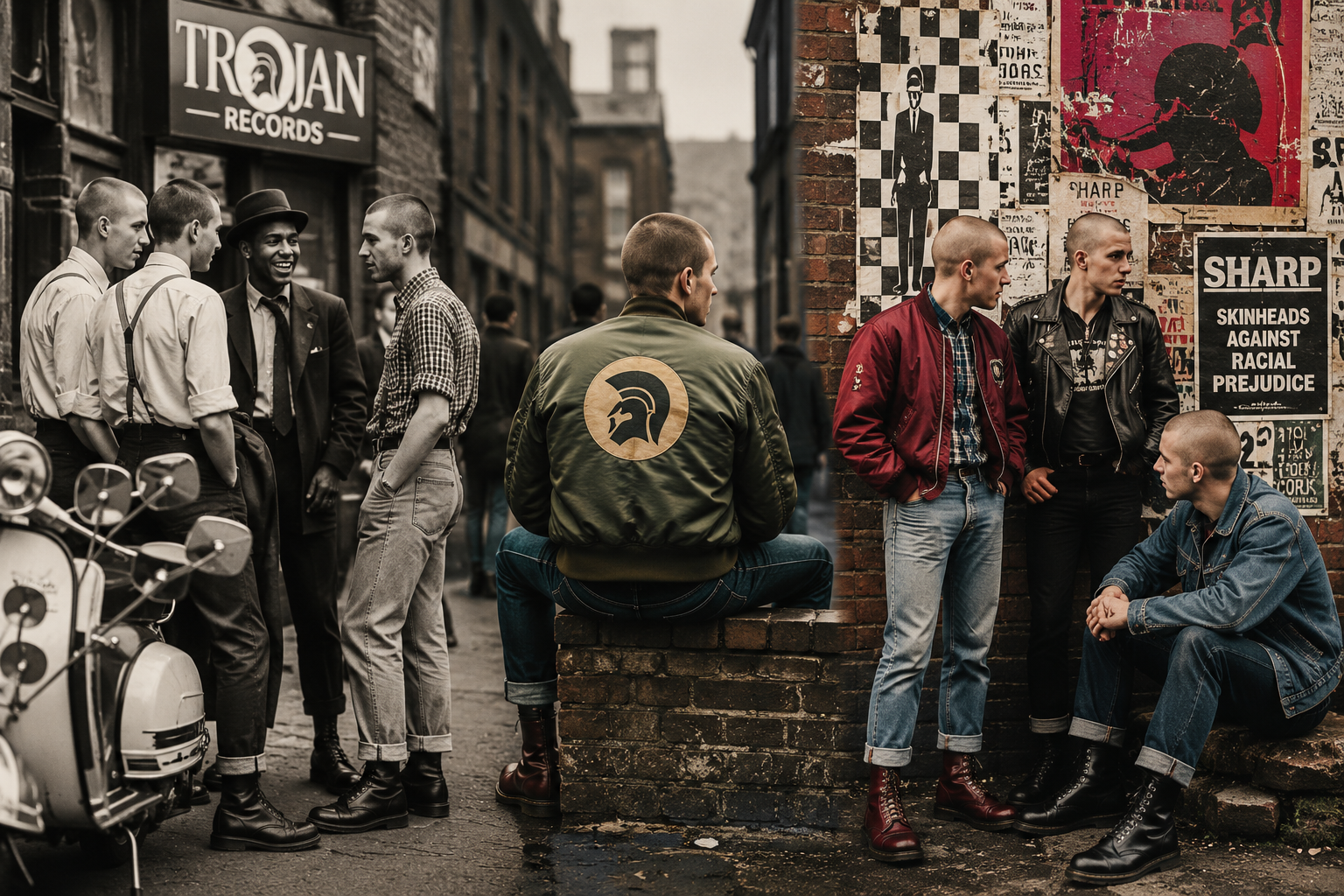 For decades, the word “skinhead” has been misunderstood by mainstream media and popular culture. Many people immediately associate the skinhead movement with racism, neo-Nazism, or violent extremism. However, the real history of skinhead culture tells a very different story — one rooted in working-class pride, multicultural unity, music, and street fashion. The original skinhead movement began in late 1960s Britain, particularly in working-class neighborhoods of London. It emerged from a mixture of British mod culture and Jamaican rude boy influence, creating a unique youth subculture that celebrated identity, music, and brotherhood. The Birth of the Skinhead Movement The first generation of skinheads were primarily working-class youths who rejected both upper-class conservatism and the hippie movement of the 1960s. Instead of embracing peace-and-love ideals, they built their own culture around sharp clothing, clean appearances, music, football culture, and life on the streets. One of the most important influences came from Jamaican immigrants living in the UK. British youths shared neighborhoods, clubs, dance halls, and music scenes with Jamaican communities, leading to the rise of a multicultural identity built around ska, rocksteady, reggae, and soul music. This connection is why early skinheads listened heavily to artists released under labels like Trojan Records, which became iconic within the scene. The classic skinhead style — Dr. Martens boots, rolled-up jeans, braces, Harrington jackets, and shaved hair — was inspired as much by Jamaican rude boys as British street fashion. Spirit of ’69 Among traditional skinheads, the phrase “Spirit of ’69” represents the golden era of the movement. It symbolizes the original skinhead identity before politics and extremism divided the culture. During this period, skinhead gatherings revolved around music, pubs, football, scooter culture, and working-class solidarity. Ska and reggae were central to the movement, proving that the early skinhead scene was deeply connected to Black music and multicultural influence. Contrary to modern stereotypes, many early skinheads saw themselves as apolitical or simply proud of their working-class roots. From Ska to Oi! By the late 1970s, Britain faced economic hardship, unemployment, and growing frustration among working-class youth. Around the same time, punk rock exploded across the UK, bringing raw energy and anti-establishment attitudes. Skinhead culture experienced a revival during this era and became closely connected to punk music. This led to the rise of Oi! music — a street-level form of punk rock focused on working-class life, friendship, football culture, pubs, and social frustration. Bands like Sham 69, Cock Sparrer, Cockney Rejects, and The 4-Skins became closely associated with the scene. Oi! music retained the spirit of working-class identity while mixing punk aggression with the communal energy of the original skinhead movement. At the same time, the 2 Tone ska revival helped reconnect skinhead culture with its Jamaican roots. Bands like The Specials and Madness combined ska rhythms with punk energy, promoting racial unity during a period of rising social tension in Britain. The Hijacking of the Image In the late 1970s and early 1980s, far-right political groups such as the National Front began targeting disillusioned youths within the skinhead scene. Some factions adopted racist ideologies, creating the image that would later dominate media coverage. However, many traditional skinheads rejected this direction completely. Anti-racist groups such as SHARP — Skinheads Against Racial Prejudice — were formed to reclaim the original spirit of skinhead culture and oppose neo-Nazi factions. SHARP members continued embracing ska, reggae, soul, Oi!, and working-class unity while rejecting racism and political extremism. The movement spread internationally and became an important part of preserving traditional skinhead identity. More Than a Stereotype Today, skinhead culture remains diverse and often misunderstood. While extremist groups did exist and gained media attention, they never represented the entire movement. Many skinheads worldwide continue to celebrate the original values of the culture: music, unity, style, loyalty, and working-class pride. The real history of skinhead culture is not simply a story about politics or violence. It is a story about multicultural Britain, Jamaican musical influence, youth identity, and the evolution of street culture from ska dance halls to Oi! punk concerts. From ska to Oi!, the skinhead movement remains one of the most influential — and misunderstood — subcultures in modern history.
 -
ID control for Social Media will come in many countries
Joe Hawkin replied to DHR's topic in Help & Suggestion
at one side it's good to defend them, from predators or bad people, but i don't trust all this social media mogul, our data is gold for them, the can do whatever they want with the data they have from us, that's why i like when we have our own place like this to socialize on the net. -
Haymaker for me!
-
why u 88 on everything @ Aleister Adams it's fucking annoying. just chill out and keep your ideology to ya self, it's skinhead forum for **** sake.
-
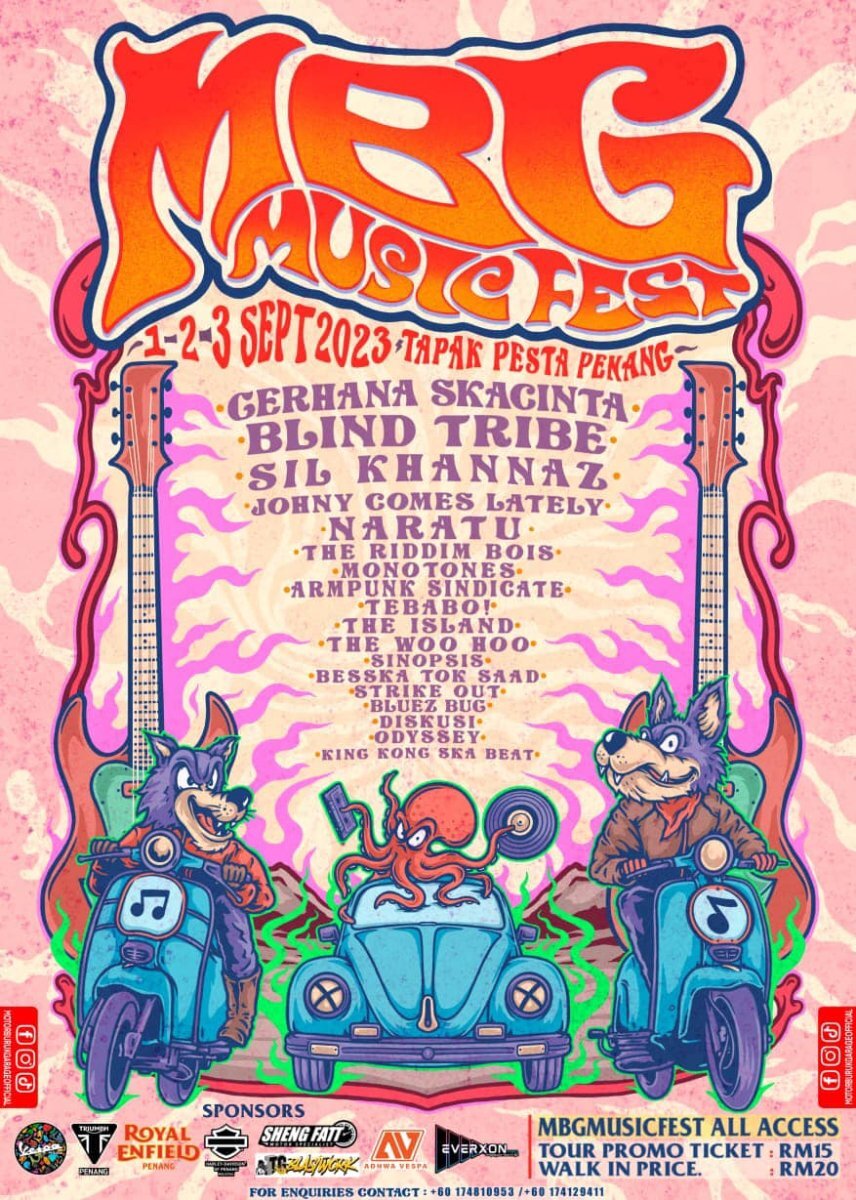
until1,2&3 SEPTEMBER 2023 Ticket : rm15 ONLY
-
MBG VESPA LAMBRETTA JAMBOREE 2023 1,2&3 SEPTEMBER 2023

- 1 reply
-
- 1
-

-
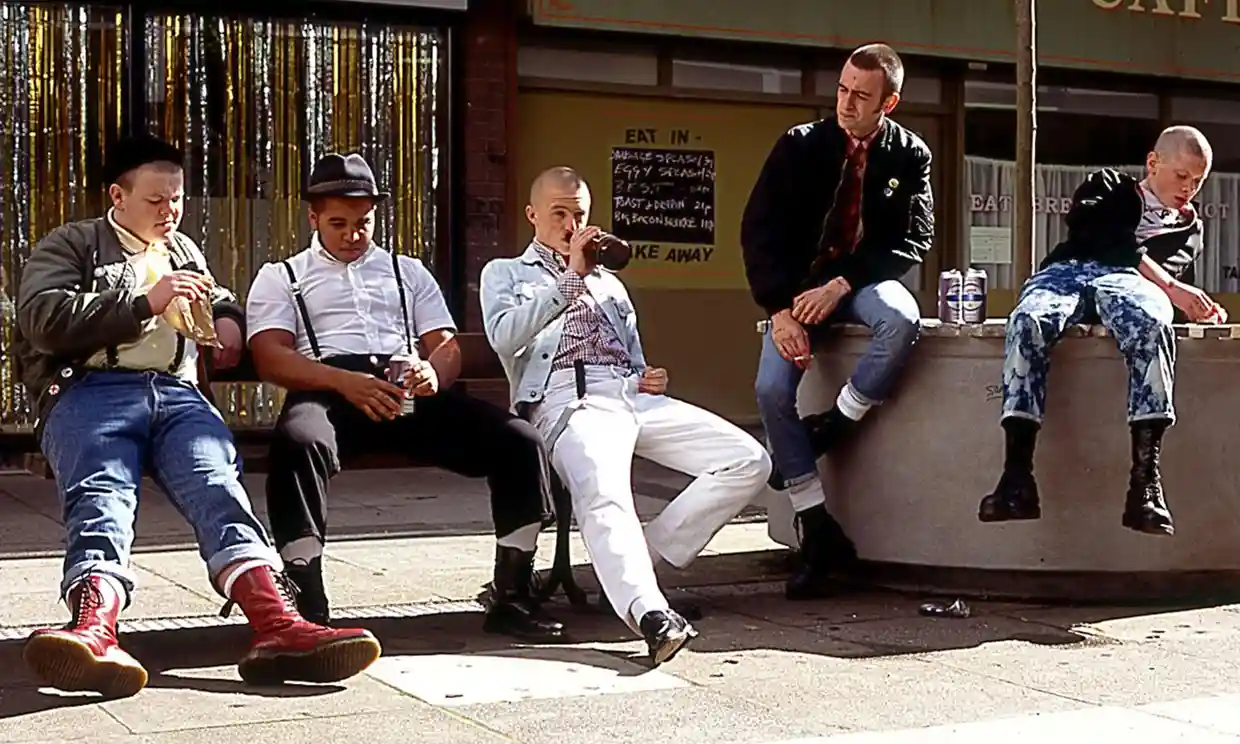 Courtesy of the artist and ACC Art Books You do a disservice to the complex cult of the skinhead in your quick crossword (26 January). Despite the awareness and slight distancing effect implied by the question mark in the clue – “Racist or violent person?” – my heart sank. Am I alone? The compiler could at least have started with “Stereotypically…” Of course, there is a very nasty history of racism and violence associated with the cult, in Britain and elsewhere, which needs to be remembered, understood and responded to when any such racism and violence resurface. Equally, however, there are other, more nuanced histories. One is still being written, by the later waves of skins and rude boys inspired by the hugely popular two-tone movement of the late 1970s and 80s, which was and remains an explicitly anti-racist and anti-violent movement, albeit one that sadly attracted racist and violent elements at the time. There have been and continue to be many other iterations of the “good skinhead” since. Indeed some skinheads, and ex-skinheads – those of a certain age who still wear smartly retro skinhead clobber, some of whom write for your paper – would, I know, consider themselves just as warm, kind, sympathetic, thoughtful, intelligent and non-racist and non-violent as, say, Shane Meadows’ Woody and co in the This Is England series, which did at least try to redress the cliches via a more sympathetic portrayal of white (and black), working-class skinheads in Thatcher’s Britain. These were me and my mates and thousands of others – these are the other skinheads who should also be remembered. Dr Sean Purchase Brentford, London
 -
nice tune mate! been listenin' to da radio the whole day, damn good tune!
-
The Official - Oi! Ain´t dead!! (Full Album) Malaysia Oi! Skinhead 2011 1 We're Back 0:00 2 Faces Of Oi! 1:55 3 New Age (Blitz) 5:19 4 Pressure Drop (Toots) 7:57 5 Real Street Music 10:24 6 The Traditionals 13:20 7 Oi! Ain't Dead (Condemned 84) 15:51 8 Street Army 18:45
-
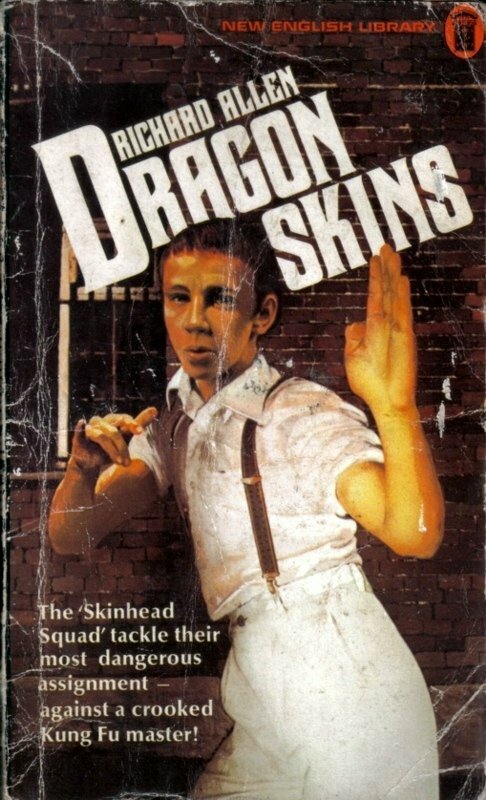 In all possibility, you may think that when it comes to Richard Allen and the New English Library Skinhead titles there’s little more to be said, almost 50 years on. And like the steel-toed kick in the balls you’d clearly deserve, you’d be wrong, very wrong. Mark Sargeant (Sarge) has written for Scootering since the 80s – many post-decimal currency readers wouldn’t even know the name Richard Allen without the contribution of his spadework in bringing Skinhead to a new audience during that period. Sarge was kind enough to put away his toolbox and answer a few questions on ‘The Richard Allen Legacy’, his late 80s Scootering interview with the author himself and life as a rally-going soul DJ. When did you first come across the Richard Allen books? At school. Skinheads were morphing into suedeheads at the time, it was a mixed grammar school, with quite a strict policy on uniform and colours of uniform. Those of us with a rebellious streak pushed the boundaries with button-down Ben Sherman, or Jaytex Oxford cotton shirts or white Fred Perry polo shirts with black, grey or even navy blue sta-press and black Doc Marten or brogue shoes. Later Brutus jumbo collar shirts and certain combinations of tonic sta-press were favoured by those of us in the know, of course, navy blue or black Crombie coats were worn to and from school. Instead of being sent home for hair being too long, quite a few lads were sent home until their hair grew. New English Library put out Skinhead by Richard Allen, which followed the exploits of East End skinhead Joe Hawkins. I got my copies of Skinhead and Suedehead from WHSmith in Oxford city centre, in fact, I got most of my Richard Allen books from there, and still have those copies today. Some schoolmates would’ve found themselves in trouble at home if they dared to take a copy there, so well-thumbed dog-eared copies of Skinhead, and soon after Suedehead were passed around in a similarly furtive way as soft porn magazines. Some copies of Skinhead and Suedehead were confiscated by school teachers, who probably wanted a sneaky read themselves. Those with grebo inclinations had their own similar books such as Chopper also published by New English Library. One lad in my year selected to read a chapter from Skinhead in a public reading/speaking competition held at the school. Despite several Anglo-Saxon words included in his chosen chapter, the subject of which was football violence, he more or less pulled it off, apart from a minor admonishment by the head of English, for sniggering while reading out loud a line about Joe Hawkins kicking some random opponent in the balls! Cult fiction like Richard Allen books tapped into the impressionable teenage market of the very early 70s, way before the internet, mobile phones and social media. Suedehead sales went into the millions, which literally saved New English Library from going bust. Were you still a skinhead in the late 80s when you were at Scootering and beginning to write about the books or more of a scooterboy by then? More of a scooterboy/soulie, though always have had a leaning towards the original skinhead/suedehead era. Interesting times… Oxford Roadrunners had mods, scooterboys, scooter skins, soulboys, punks and psychobillies as members, with no cultural differences as scoots were what brought us all together. The problem was, I think, uber-elitist mods in the early 80s pushed the more Quadrophenia-inspired away, scooter boys were on the rise, riding serious distances on scoots led to practicalities in the attire stakes. Also while many arrived via mod/Quadrophenia, it soon became an insult to be dubbed a mod, scooter boys were in effect anti-mod in appearance… yet underneath shared a similarly wide taste in music. Personally, I went from a young skinhead/suedehead and later bootboy eras into soul, with a brief dip into early punk, both northern soul going to Wigan Casino events as well as funk/jazz funk Rio Didcot, Lacy Lady and Goldmine down near Canvey Island among others. Then the mod revival reawakened my interest in scoots, having learned to ride Lammys aged 13/14. Mod, skin/suedehead and soulboys/soulies cross-pollinated with each other. I can remember scoots parked up outside Wigan Casino on many an occasion, for example. What caused you to put pen to paper with ‘The Richard Allen Legacy’ for Scootering? If memory serves, it was initially a broad overview of cult fiction, from Absolute Beginners onwards, that very tenuously included scooters. A loose follow-on to Steve Berry’s overview of scoots featured in big and small screen films. Other books included covered The Death Penalty – I can’t remember the author off the top.of my head – which was about a skinhead/bootboy football crew who after their team gets knocked out of a cup competition, track down the referee who awarded a penalty against them. Set in the early 70s, the referee is eventually chased while out training alone by the ‘heroes’ on their scooters, before being kicked to death. Caleb, a West Indian lad on the periphery of the crew, gets fitted up for the killing. The Richard Allen Legacy was kind of a natural progression from the initial cult fiction idea. There were a total of 18 books penned by James Moffat as Richard Allen… some better than others, of course. Demo, the first Richard Allen book about/subject of student/hippy protesters was the only book I didn’t get as a new publication. Skinhead, Suedehead, Boot Boys, Smoothies especially and the last Richard Allen book Mod Rule were part of the formative years of two separate generations of the magazine’s readers at that time. Outside of the novels, there was a fair amount of rucks between those subcultures There were a few, well more than a few, incidents, stand-offs and the like. That the male of the species has an inbuilt natural desire to defend their turf and invade/conquer others, without getting too sociological, goes back to prehistoric times. I can remember being at Tiffany’s Great Yarmouth when Desmond Dekker played live and the gig was halted by right-wing boneheads who had planned the disruption. Of course, it was near impossible to differentiate right-wing extremist boneheads and scooter skins there to see a skinhead reggae legend. The, err, boot was on the other foot so to speak, at Margate rally when Col. Kilgore Vietnamese Formation Surf Team played, right-wing boneheads attempted to disrupt that rally gig but ended up getting battered. Isle of Wight rally when several Oi bands played and ended up in a riot culminating in scooters being banned from the island also marked the end of overt infiltration of the scene by right-wing boneheads. Of course, in the early days of the national rallies locals took exception to their hometowns being invaded by hordes of scooter-riding outsiders, with occasional inevitable culture clashes resulting in scuffles and punch-ups. Riding back from a Bournemouth rally around 1980, a few of Oxford Roadrunners took an unplanned detour which resulted in some local yokel wannabe punks mob-handed in cars attempting to run the scoots and riders off the road. Needless to say, a return visit was paid! Early RSG nights run by Jon Buck in Berkhamsted invariably ended up with mass brawls in the streets with mods, scooterists and soulies against mobbed-up locals. Both incidents being far from unique, similar incidents were rife across the UK from the 60s through to the noughties and beyond. In general terms, rivalries such as mods and rockers, skinheads and grebos, punks and revival teddy boys, football team local derby matches, and the like have, to lesser or greater degrees, been part of teenage and beyond males’ makeup. To quote Madness, oh what fun we had! Subcultural rites of passage and a sense of belonging while looking down on and belittling those not a part of your inner circle was for many decades a quasi-tribal part of growing up, certainly in the UK. In recent times the advent of political correctness along with invariably mollycoddling of their young the British middle classes have created a generation of mummy’s snowflakes, the combination of which has all but eradicated the advent of new youth subcultures with tribal undercurrents sadly. Which has led to youngsters with a desire to be different and to rebel against society to discover for themselves subcultures that are decades old, though the influx of young blood does put a contemporary spin on what’s gone before. At least that’s the way I see it. By the time you wrote that piece Moffat/Allen was largely forgotten about? Apparently so. Certain Richard Allen titles were beginning to command £5 even £10 for near-mint first editions from collectors. But yes, in the main, even with Mod Rule being published at the tail-end of the 79 and early 80s revival, Richard Allen books, along with similar cult fiction novels had been forgotten by the mid to late 80s. Although I didn’t know at the time, James Moffat AKA Richard Allen was not in the best of health, in a care home. I tentatively attempted to get in touch with him (as did a few others with less luck) and I sent a copy of the magazine with The Richard Allen Legacy in it, along with a covering letter to him via New English Library. I believe it was forwarded on to his family, then they forwarded it on to him. He replied by post, he was surprised there was an interest in some of the books he’d written many years before, and pleased with the Richard Allen Legacy piece too. On the back of that he agreed to do an interview (by post), he politely declined meeting in person or speaking on the telephone. His official reasoning being that he didn’t want to shatter any illusions of how Richard Allen was perceived to be like. The stark reality was he really wasn’t in the best of health and couldn’t guarantee he’d actually be well enough to keep to any time or date schedule. Instead by communicating via letter he could respond as and when he was able. I was in communication via correspondence with him for some time until a few weeks before he passed away. He asked that I didn’t, at the time, reveal that James Moffat was Richard Allen. In fact, all correspondence I received he signed Richard or Richard Allen. Did the interview have any immediate impact, either by the readership or outside of it? The magazine had some complimentary comments when it came out. What also transpired as an aside to the interview was James Moffat had retained copyright on his Richard Allen novels. I put James and George Marshall at ST (Skinhead Times) Publishing in touch with each other, the result of which saw ST put out a series of six Richard Allen books, each with three linked titles. For volume one of the series of six James, as Richard Allen, wrote the foreword. Was nice for me to get a namecheck in that. Also, as an aside to the interview, George, just after doing the deal with James for reprinting and represent all 18 Richard Allen titles for several years after published a number of cult fiction books, via ST, alongside his own coffee table-type books on skinheads. A short while after the interview came out I had a few letters from longtime Richard Allen fans, one who generously sent me a copy of, I think, Marathon Man by James Moffat… it was the book he was challenged to write on live Saturday night magazine programme On The Braden Beat. It was in the run into an Olympics, so topically the Olympic Games were worked into the plot. The challenge was to write and (have it) published as a book in one week/seven days… James managed to complete the challenge with one day to spare! As far as I’m aware that Braden Beat appearance was the only time James or one of the very few times, appeared on television. He was quietly quite proud of that achievement, as he mentioned it several times to me. What about yourself after that era of Scootering? I’ve covered a vast number of feature scooters as well as the occasional rallies, events, scooter sport meetings and custom shows. Also interviewing bands, musicians, live shows, specialist music DJ-driven all-nighters and all-dayers, plus on occasion interviews with authors of books, and even films and plays. In 2014 I was commissioned to produce an entire supplement for Scootering, ’50 Years of Mod’, as 2014 was the golden jubilee of the then over-reported and sensationalised bank holiday mods and rockers clashes. Though I say so my self it was rather good as it revealed the realities of some of the ‘happenings’ of 1964 from people who were there at the time. Additionally, there was a short overview of subcultures that were, in effect, the bastard sons of the original mods, skinheads/suedeheads, northern soulies and casuals amongst them. As an aside, albeit linked to writing and photography for Scootering I’ve contributed as a researcher/interviewee to a number of books with specific bands, eras, and subcultures as subject matter. In recent times Scootering editorial policy moved away from the more lifestyle type of features for several years. However, over the past 18 months or so there has been a massive swing back to encompass, embrace and include a wide range of lifestyle, as in music, books, and clothes, subjects in Scootering magazine. source : CreaseLikeKnives
 -
Show me a Skinhead Antifa Music/Reggae band from your place!
Joe Hawkin replied to Christiane's topic in Music
for me the best traditional skinhead band and music in Malaysia is The Official -
thanks for the info, love the songs, now i fall in love with Boss Capone! 😁
-
Tracklist 1 Stop Da' Pressure 2 What Hav U' Be 3 Skankin' In Love 4 Oh! Reena 5 Class Kids Story
-
The Official - JB Riot Skins E.P Malaysia - Skinhead Oi! (1997) 1. Youth of the working class 00:00 2. J.B. Riot 03:56 3. Saturday 06:30 4. Proud with our life 10:27 5. Sha... Nah... nah! 12:36
-
The Mister - Warisan Anak kecil main api Terbakar hatinya yang sepi Air mata darah bercampur keringat bumi dipijak milik orang Nenek moyang kaya raya Tergadai seluruh harta benda Akibat sengketa sesamalah kita Cita lenyap di arus zaman Indahnya bumi kita ini Warisan berkurun lamanya Hasil mengalir ke tangan yang lain Pribumi merintih sendiri Masa depan sungguh kelam Kan lenyap peristiwa semalam Tertutuplah hati terkunci mati Maruah peribadi dah hilang Kini kita tinggalnya kuasa Yang akan menentukan bangsa Bersatulah hati bersama berbakti Pulih kembali harga diri Indahnya bumi kita ini Warisan berkurun lamanya Hasil mengalir ke tangan yang lain Pribumi merintih sendiri music Indahnya bumi kita ini Warisan berkurun lamanya Hasil mengalir ke tangan yang lain Pribumi merintih sendiri Kita sudah tiada masa Majulah dengan maha perkasa Janganlah terlalai teruskan usaha Melayu kan gagah di nusantara Indahnya bumi kita ini Warisan berkurun lamanya Hasil mengalir ke tangan yang lain Pribumi merintih sendiri Pribumi merintih sendiri Pribumi merintih sendiri
-
@ Christiane nice taste of music hors controle is a brazil band ?
-
Take a look around and tell me what do you see All the injustice in the society I live in frustration and misery The way I look is the way I want But I'll be caught by a bunch of cops now This is what they call democracy! [Pre-Chorus:] But I'll be down on the streets With all the kids tonight Feeling lots of pride 'Cause we're supposed to have freedom and We do have a right To crop our heads and put our boots on alright [Chorus:] We are A. C. A. B. We are the skinhead army We're the youth of the working class We'll make a change, we will make it fast We are A. C. A. B. We are the skinhead army We're the youth of the working class We'll make a change, we will make it fast **** all the coppers **** politicians They never care all they bring are frustrations **** the government and their politics They never care, and they're full of shit The way I look is the way I want But I'll be caught by a bunch of cops now This is what they call democracy! [Pre-Chorus:] But I'll be down on the streets With all the kids tonight Feeling lots of pride 'Cause we're supposed to have freedom and We do have a right To crop our heads and put our boots on alright [Chorus:] We are A. C. A. B. We are the skinhead army We're the youth of the working class We'll make a change, we will make it fast
-
shoot it up, into your vein and feel so real high, when you got no money, it will make you cry, stealing is the only way, to make you live your day, when doses is not enough you can't find your way, no strength to fight, loosing your guide, living in fright, suicide the only way.
-
@Christiane welcome! good to have u here!
-
Documentary on skinheads in Asia.
.png)