.png.bd9806eee33965a603c3a03374663758.png)

Joe Hawkin
-
Posts
51 -
Joined
-
Last visited
-
Days Won
6
User Groups

2 Followers


About Joe Hawkin
Joe Hawkin's Achievements






-
-
 From the album A Skinhead‘s pride part I Release date: december 16th, 2022 Label: KB-Records Order link: www.oi-the-shop.com Lyrics: Here´s a story of some sinners,that somehow made it through Once the losers now the winners, Martens Army Skinhead Crew So by now people know our name, cause we always took the blame Proud to be the best of the worst ones and we never feel ashamed Chorus: We´ve never changed our minds Never changed our fucking minds We´ve never betrayed our lives Never betrayed our fucking lives We are violent, thirsty and out of control We are Skins and playing Skinhead Rock´n`Roll We never really had a chance to be heard what can I say If you´re playing in the grey zone you´ll be canceled anyway But don´t pretend to be somebody, just be yourself with pride Go ahead fight everybody if you gotta do what´s right Today you´ll find us on the top, looking down to all the rest We´re the cream of the crop That´s right motherfucker We are the best! Evil grin, fake human kindness but balls as big as bells You can call us our highness and kiss our ass as well
 -
im here too, forum is different from social media, quite agree with @ Belon maybe the skinhead scene is not like when it at peak, most of us are adult and have our own life and seldomly use the internet, because we are busy with life and most of my crew always meet each other in real life, drinking and eating at the cafe.
-
Traditional Skinhead: The Original Spirit of Working-Class Culture
Joe Hawkin posted an article in News
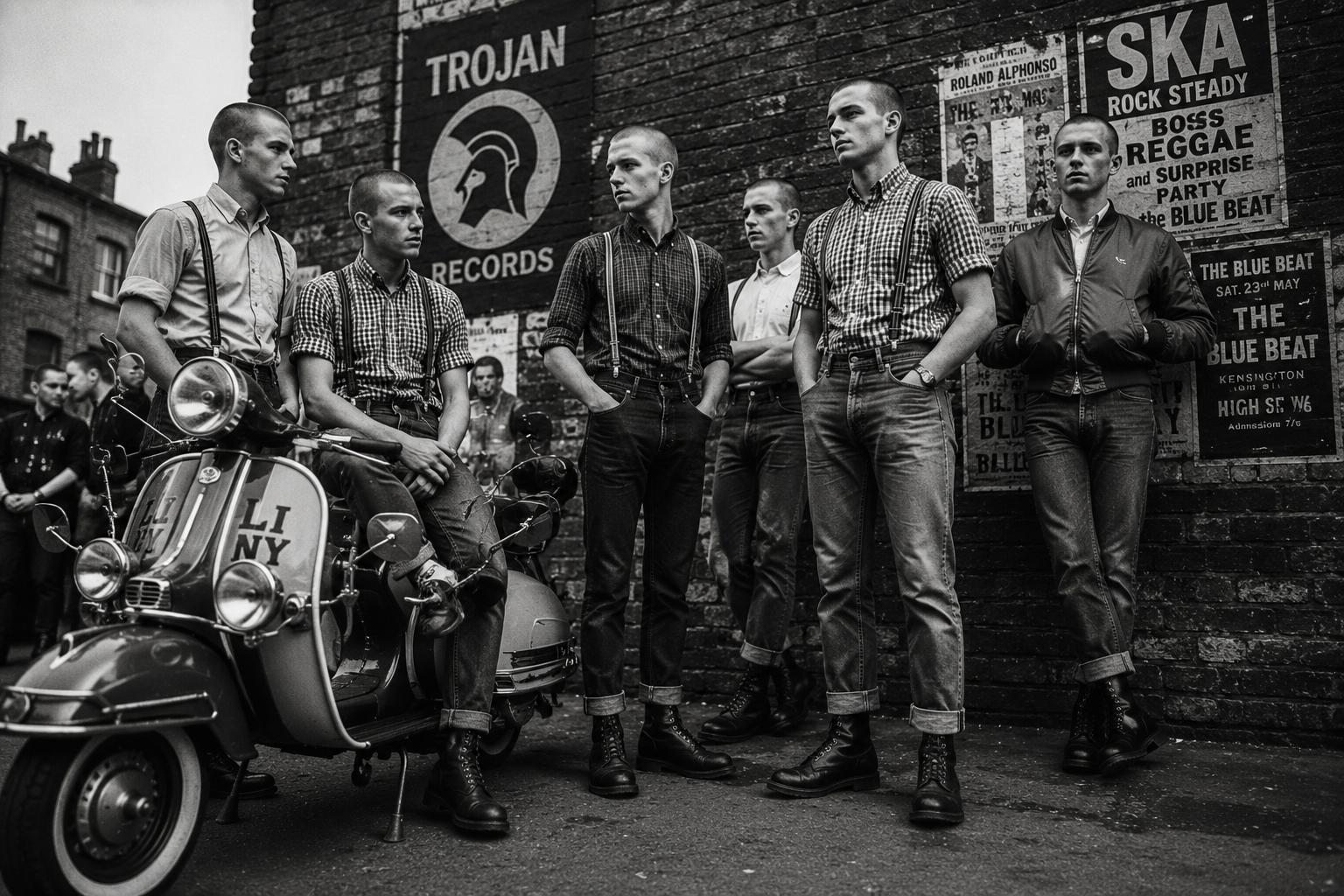 When people hear the word “skinhead,” many immediately think about violence, racism, or extremist politics. Yet the original traditional skinhead culture was something very different. Long before the media stereotypes and political hijacking, skinhead culture began as a proud working-class movement built around music, fashion, loyalty, and street identity. Traditional skinheads — often called “Trad Skins” — continue to preserve the original spirit of the culture that first emerged in Britain during the late 1960s. For many, it is not about politics at all, but about authenticity, brotherhood, music, and respect for the roots of the movement. The Origins of Traditional Skinhead Culture The skinhead movement first appeared in working-class areas of London around 1968 and 1969. It evolved from the earlier Mod scene while also taking heavy influence from Jamaican rude boy culture brought by Caribbean immigrants living in the UK. (en.wikipedia.org) Young British workers and Jamaican youths often shared the same neighborhoods, clubs, dance halls, and music scenes. This cultural crossover created a unique identity that mixed sharp British street fashion with Jamaican ska, rocksteady, reggae, and soul music. Traditional skinheads listened to artists released under labels such as Trojan Records, which became deeply associated with the scene. Music was not just entertainment — it was part of everyday life and identity. The Classic Style One of the most recognizable parts of traditional skinhead culture is the fashion. The style was practical, clean, and strongly connected to working-class life. Classic traditional skinhead fashion includes: Dr. Martens or combat boots Braces (suspenders) Straight-leg jeans with rolled cuffs Harrington or bomber jackets Polo shirts and button-up shirts Close-cropped or shaved hair The shaved hairstyle was originally practical for factory work and street life rather than political symbolism. Over time, the look became one of the most iconic youth styles in British subculture history. For traditional skinheads, style represents discipline, pride, and identity. It is not about expensive fashion brands, but about staying true to the roots of the culture. Spirit of ’69 Among traditional skinheads, the phrase “Spirit of ’69” represents the golden age of the movement. It refers to the late 1960s period when skinhead culture centered around music, friendship, football, pubs, scooters, and working-class solidarity. Many traditional skinheads see this era as the purest form of the culture before politics and extremist groups began damaging its public image. The “Spirit of ’69” remains important today because it reminds people that the original skinhead scene was multicultural and heavily connected to Black Jamaican music culture. Ska and reggae were central parts of the movement from the very beginning. Traditional Skinheads and Music Music has always been at the heart of traditional skinhead culture. Early skinheads danced to ska, rocksteady, reggae, soul, and later Oi! music during the late 1970s skinhead revival. Traditional skinheads often continue supporting: Ska Rocksteady Reggae Northern Soul Oi! Street Punk Bands like Symarip, The Specials, Madness, Cock Sparrer, and Sham 69 became closely associated with the scene across different generations. For many traditional skinheads, music is more important than politics. The culture survives through concerts, vinyl records, pubs, football culture, and underground gatherings worldwide. Rejecting Extremism One of the biggest misunderstandings surrounding skinhead culture is the belief that all skinheads are racist or extremist. In reality, many traditional skinheads strongly reject racism and political extremism. During the late 1970s and 1980s, far-right groups attempted to recruit within parts of the skinhead scene, creating the negative image that later dominated media coverage. However, many skinheads opposed this completely. Groups such as SHARP (Skinheads Against Racial Prejudice) emerged to defend the original multicultural roots of the movement and separate traditional skinhead culture from extremist politics. Even today, many traditional skinheads continue emphasizing unity, respect, loyalty, and working-class identity rather than political ideology. A Culture That Still Lives Although skinhead culture remains underground, traditional skinheads still exist worldwide. Scenes can be found across the UK, Europe, Southeast Asia, Japan, and Latin America. Modern traditional skinheads continue preserving the original spirit through music events, football culture, vintage fashion, vinyl collecting, and underground communities. For outsiders, the culture is often misunderstood because of decades of media stereotypes. But for those inside the scene, traditional skinhead culture is about much more than shaved heads or boots. It is about history, identity, loyalty, music, and pride in working-class roots. More than fifty years later, the Spirit of ’69 still survives — not through politics or headlines, but through the people who continue living the culture every day.
 -
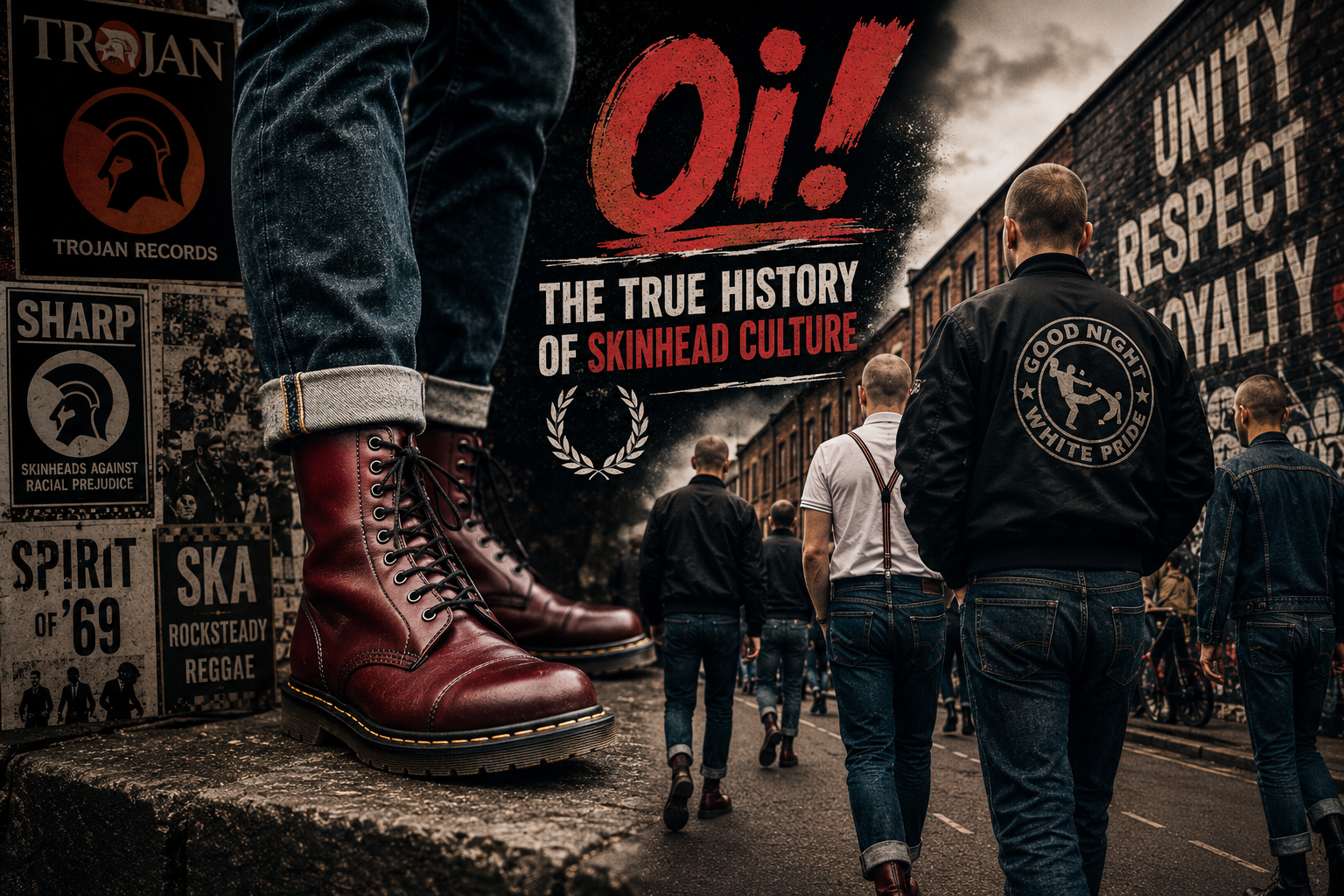 For years, many people believed skinhead culture had faded into history. Yet across Europe, Asia, and underground punk scenes worldwide, a new generation is quietly reviving the spirit of traditional skinhead culture through music, fashion, and working-class identity. In recent years, Oi! music and classic skinhead style have seen a noticeable resurgence among younger punk fans. Modern bands influenced by old-school street punk, ska, and hardcore are attracting a new audience interested in the roots of the culture rather than political extremism. The Return of Oi! One of the clearest signs of this revival can be seen in the growing popularity of modern Oi! bands across Europe. In France, a movement often called “Cold Oi” has emerged, blending classic street punk energy with post-punk and coldwave influences. Bands such as Syndrome 81, Rancoeur, and Rixe have helped introduce Oi! music to a younger audience while maintaining its raw working-class identity. Unlike the aggressive political image often associated with the genre in the past, many modern bands focus more on everyday life, urban struggles, friendship, and underground culture. The sound remains loud, direct, and emotional — but with a more modern atmosphere influenced by post-punk and alternative music. The revival is not limited to Europe. Underground scenes in Asia, including Malaysia, Indonesia, Japan, and Singapore, continue to support traditional skinhead and street punk culture through gigs, independent labels, and DIY communities. Malaysia Still Represents Malaysia’s underground Oi! and street punk scene remains respected internationally. Recently, Malaysian Oi!/Street Punk band ACAB was announced for a London performance at the legendary Underworld Camden venue — marking a major moment for Southeast Asian skinhead and punk culture. For longtime fans, this shows that the Malaysian scene still carries influence beyond local borders. Bands from Southeast Asia continue to represent the raw energy and spirit that originally made Oi! culture powerful. Beyond The Stereotypes One major reason for the renewed interest in skinhead culture is a growing awareness that the original movement was never entirely about politics or racism. Historians and music writers increasingly highlight the multicultural roots of the scene, especially its strong connection to Jamaican ska, reggae, and rude boy culture. Traditional skinhead culture was originally built around music, fashion, working-class pride, football culture, and street identity. Early skinheads listened heavily to ska and reggae before Oi! music later became connected to the second wave during the punk era. This distinction has become important for many younger fans who want to separate classic skinhead culture from extremist groups that later tried to hijack the image. Social Media and the New Generation Platforms like Instagram, TikTok, YouTube, and online forums have also helped younger people discover vintage skinhead fashion, vinyl collections, ska music, and Oi! bands from the 1970s and 1980s. Rare footage, old gig posters, and classic Dr. Martens styles regularly circulate online, creating renewed interest in the culture’s aesthetic and history. Communities discussing Trojan Records, Spirit of ’69 culture, and SHARP (Skinheads Against Racial Prejudice) have also become more visible online. While modern skinhead culture remains underground, its influence is clearly returning through fashion, music, and youth identity. The boots, braces, shaved heads, and street anthems never truly disappeared — they simply evolved with a new generation. For many younger fans today, skinhead culture is no longer about old political headlines. Instead, it represents authenticity, music, loyalty, and working-class roots that continue to survive decades after the original Spirit of ’69.
 -
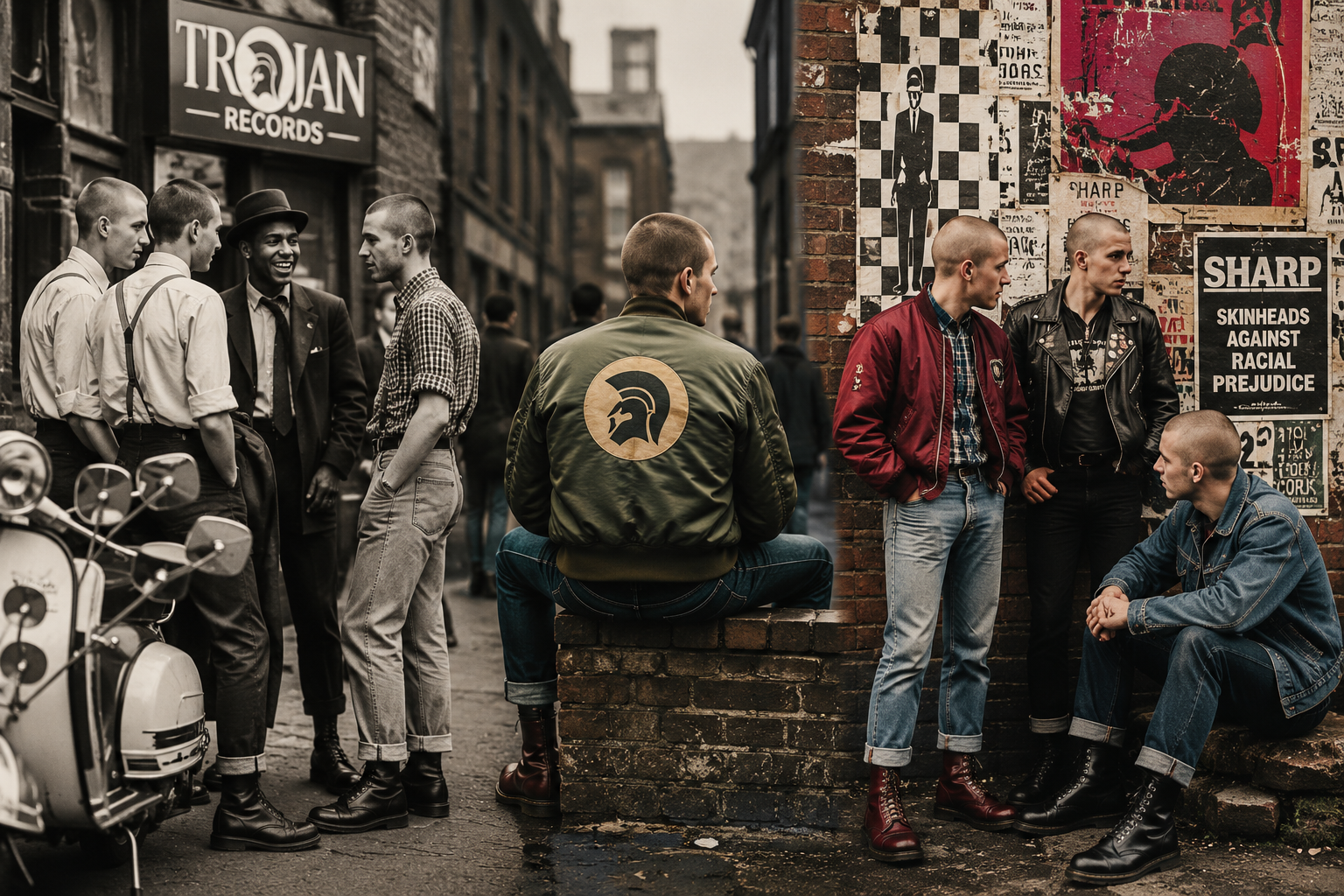 For decades, the word “skinhead” has been misunderstood by mainstream media and popular culture. Many people immediately associate the skinhead movement with racism, neo-Nazism, or violent extremism. However, the real history of skinhead culture tells a very different story — one rooted in working-class pride, multicultural unity, music, and street fashion. The original skinhead movement began in late 1960s Britain, particularly in working-class neighborhoods of London. It emerged from a mixture of British mod culture and Jamaican rude boy influence, creating a unique youth subculture that celebrated identity, music, and brotherhood. The Birth of the Skinhead Movement The first generation of skinheads were primarily working-class youths who rejected both upper-class conservatism and the hippie movement of the 1960s. Instead of embracing peace-and-love ideals, they built their own culture around sharp clothing, clean appearances, music, football culture, and life on the streets. One of the most important influences came from Jamaican immigrants living in the UK. British youths shared neighborhoods, clubs, dance halls, and music scenes with Jamaican communities, leading to the rise of a multicultural identity built around ska, rocksteady, reggae, and soul music. This connection is why early skinheads listened heavily to artists released under labels like Trojan Records, which became iconic within the scene. The classic skinhead style — Dr. Martens boots, rolled-up jeans, braces, Harrington jackets, and shaved hair — was inspired as much by Jamaican rude boys as British street fashion. Spirit of ’69 Among traditional skinheads, the phrase “Spirit of ’69” represents the golden era of the movement. It symbolizes the original skinhead identity before politics and extremism divided the culture. During this period, skinhead gatherings revolved around music, pubs, football, scooter culture, and working-class solidarity. Ska and reggae were central to the movement, proving that the early skinhead scene was deeply connected to Black music and multicultural influence. Contrary to modern stereotypes, many early skinheads saw themselves as apolitical or simply proud of their working-class roots. From Ska to Oi! By the late 1970s, Britain faced economic hardship, unemployment, and growing frustration among working-class youth. Around the same time, punk rock exploded across the UK, bringing raw energy and anti-establishment attitudes. Skinhead culture experienced a revival during this era and became closely connected to punk music. This led to the rise of Oi! music — a street-level form of punk rock focused on working-class life, friendship, football culture, pubs, and social frustration. Bands like Sham 69, Cock Sparrer, Cockney Rejects, and The 4-Skins became closely associated with the scene. Oi! music retained the spirit of working-class identity while mixing punk aggression with the communal energy of the original skinhead movement. At the same time, the 2 Tone ska revival helped reconnect skinhead culture with its Jamaican roots. Bands like The Specials and Madness combined ska rhythms with punk energy, promoting racial unity during a period of rising social tension in Britain. The Hijacking of the Image In the late 1970s and early 1980s, far-right political groups such as the National Front began targeting disillusioned youths within the skinhead scene. Some factions adopted racist ideologies, creating the image that would later dominate media coverage. However, many traditional skinheads rejected this direction completely. Anti-racist groups such as SHARP — Skinheads Against Racial Prejudice — were formed to reclaim the original spirit of skinhead culture and oppose neo-Nazi factions. SHARP members continued embracing ska, reggae, soul, Oi!, and working-class unity while rejecting racism and political extremism. The movement spread internationally and became an important part of preserving traditional skinhead identity. More Than a Stereotype Today, skinhead culture remains diverse and often misunderstood. While extremist groups did exist and gained media attention, they never represented the entire movement. Many skinheads worldwide continue to celebrate the original values of the culture: music, unity, style, loyalty, and working-class pride. The real history of skinhead culture is not simply a story about politics or violence. It is a story about multicultural Britain, Jamaican musical influence, youth identity, and the evolution of street culture from ska dance halls to Oi! punk concerts. From ska to Oi!, the skinhead movement remains one of the most influential — and misunderstood — subcultures in modern history.
 -
ID control for Social Media will come in many countries
Joe Hawkin replied to DHR's topic in Help & Suggestion
at one side it's good to defend them, from predators or bad people, but i don't trust all this social media mogul, our data is gold for them, the can do whatever they want with the data they have from us, that's why i like when we have our own place like this to socialize on the net. -
Haymaker for me!
-
why u 88 on everything @ Aleister Adams it's fucking annoying. just chill out and keep your ideology to ya self, it's skinhead forum for **** sake.
-
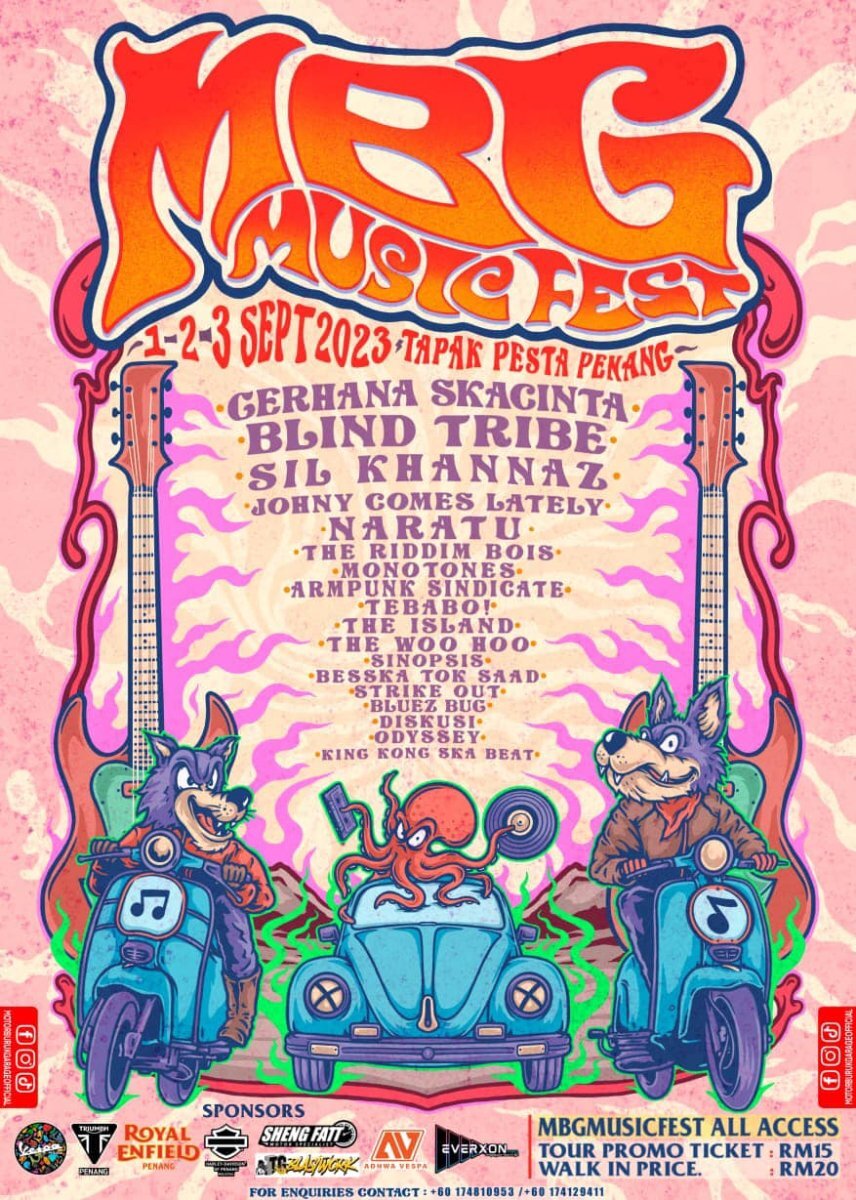
until1,2&3 SEPTEMBER 2023 Ticket : rm15 ONLY
-
MBG VESPA LAMBRETTA JAMBOREE 2023 1,2&3 SEPTEMBER 2023

- 1 reply
-
- 1
-

-
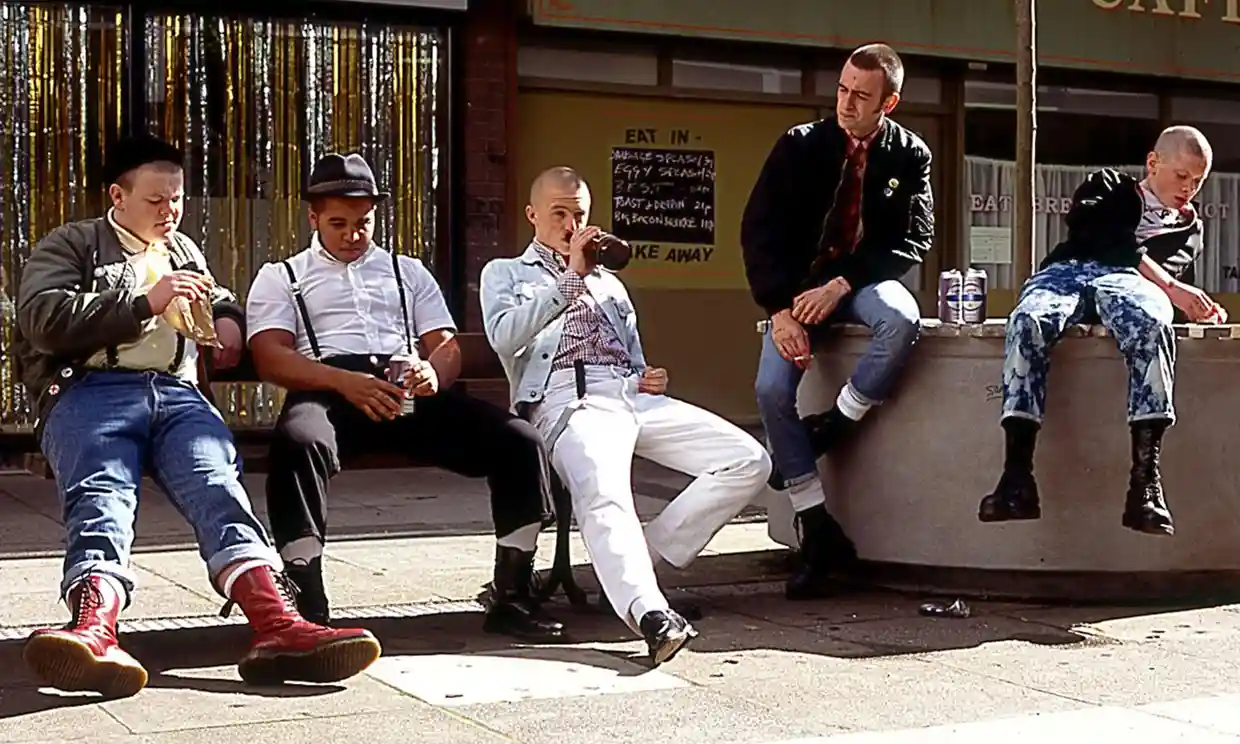 Courtesy of the artist and ACC Art Books You do a disservice to the complex cult of the skinhead in your quick crossword (26 January). Despite the awareness and slight distancing effect implied by the question mark in the clue – “Racist or violent person?” – my heart sank. Am I alone? The compiler could at least have started with “Stereotypically…” Of course, there is a very nasty history of racism and violence associated with the cult, in Britain and elsewhere, which needs to be remembered, understood and responded to when any such racism and violence resurface. Equally, however, there are other, more nuanced histories. One is still being written, by the later waves of skins and rude boys inspired by the hugely popular two-tone movement of the late 1970s and 80s, which was and remains an explicitly anti-racist and anti-violent movement, albeit one that sadly attracted racist and violent elements at the time. There have been and continue to be many other iterations of the “good skinhead” since. Indeed some skinheads, and ex-skinheads – those of a certain age who still wear smartly retro skinhead clobber, some of whom write for your paper – would, I know, consider themselves just as warm, kind, sympathetic, thoughtful, intelligent and non-racist and non-violent as, say, Shane Meadows’ Woody and co in the This Is England series, which did at least try to redress the cliches via a more sympathetic portrayal of white (and black), working-class skinheads in Thatcher’s Britain. These were me and my mates and thousands of others – these are the other skinheads who should also be remembered. Dr Sean Purchase Brentford, London
 -
nice tune mate! been listenin' to da radio the whole day, damn good tune!
-
The Official - Oi! Ain´t dead!! (Full Album) Malaysia Oi! Skinhead 2011 1 We're Back 0:00 2 Faces Of Oi! 1:55 3 New Age (Blitz) 5:19 4 Pressure Drop (Toots) 7:57 5 Real Street Music 10:24 6 The Traditionals 13:20 7 Oi! Ain't Dead (Condemned 84) 15:51 8 Street Army 18:45
.png)