.png.bd9806eee33965a603c3a03374663758.png)
All Activity
- Last week
-
 Aimangbk changed their profile photo
 - Earlier
-
 Oh, yeah I dunno... it's rare to see violence here in Malaysia.
 -

Ever Seen a Fight or Fought Someone at a Gig? Tell us about it.
DHR replied to ThatAsianSkin161's topic in General Chat
I meant violence in general in Malaysia,not from Skins. -
Perhaps I dont understand you right. I mean just a Link/Adress(Perhaps some Shops has no website)section. Ofcourse Adresses from Pubs will be a good service.
-
 sealwaffen joined the community
 -
Tbh, if you're looking for partners then this isn't a good place... Ever tried grindr, bruv? 😆 Not trying to be homophobic but yeah. This ain't the proper place I'm afraid.
-
Aimangbk joined the community
-
Still, we should connect in reality. Thats where we really exist.

-
Probably web crawlers. Those automatically visit pages, read content, and follow links to collect information.
-
 Shortcut joined the community
 -
I understand what you mean, but I don't think being anonymous necessarily means there is no sense of community or subculture. People have different levels of comfort when it comes to privacy. Some members are happy to register and share more about themselves, while others simply prefer to remain anonymous or browse without creating an account. That doesn't necessarily mean they are less interested in the community. For some people, privacy is simply important. They may want to participate, read discussions, or occasionally contribute without having their identity, profile, or activity tied to them permanently. I think there is room for both. Those who want to be more involved and identifiable can do so, while those who prefer to remain private should also be able to participate without being pressured to reveal more than they're comfortable with. A community doesn't have to mean everyone knows who everyone is. Sometimes it's simply people with a shared interest coming together, even if some choose to keep their identity private.
-
-
 From the album A Skinhead‘s pride part I Release date: december 16th, 2022 Label: KB-Records Order link: www.oi-the-shop.com Lyrics: Here´s a story of some sinners,that somehow made it through Once the losers now the winners, Martens Army Skinhead Crew So by now people know our name, cause we always took the blame Proud to be the best of the worst ones and we never feel ashamed Chorus: We´ve never changed our minds Never changed our fucking minds We´ve never betrayed our lives Never betrayed our fucking lives We are violent, thirsty and out of control We are Skins and playing Skinhead Rock´n`Roll We never really had a chance to be heard what can I say If you´re playing in the grey zone you´ll be canceled anyway But don´t pretend to be somebody, just be yourself with pride Go ahead fight everybody if you gotta do what´s right Today you´ll find us on the top, looking down to all the rest We´re the cream of the crop That´s right motherfucker We are the best! Evil grin, fake human kindness but balls as big as bells You can call us our highness and kiss our ass as well
 -
sure, but i need to think of anti scammer mechanism for that, maybe the payment is strictly paypal, so each party can dispute if any of the purchase have problem, i'll think about that, good suggestion.
-
But are we if we hide from one another as "anonumous" on sites like this? That is NOT what community or subculture is about.
-
Compared to the 90's and early 2000s there isn't much physical violence in gigs but when there is it's usually old skinheads trying to settle a grudge from years ago perhaps in their youth. There are crews with opposing ideologies to one another but if they meet each other at the same gig they usually maintain their distance and share an uncomfortable silence. This is because according to the old skins the scene isn't that big as it was in the "good ol' days" so every crew is "united" but if you ask me, it's more like an uneasy non-aggression agreement. If not for everyone trying to record every fight to post it online so it can go viral on social media, there would still be a lot of brawls and gang-driven violence lol This one time in Kuantan city, this one guy who looked barely 18 was crowdkilling during a ska segment of a gig so he was dragged out of the pit and a group of skinheads beat him up. At the time there was a skinhead crew from Kuala Lumpur who called themselves the "KL Bastards" so when this guy was crashing into one of them while they were skanking one of them got pretty pissed off. Coincidentally the same building where all of this took place was raided by police but not just any police - immigration police accompanied by the city council of Kuantan. No one got arrested but everyone - including me and my friends ran away because we didn't want them to drag on the night with their questions, urine tests and whatever bullshit. It was a fun night though, all the bands had finished their songs but 1 band - The Hardcrops.
-
Perhaps you can make a section were people can add Links from Mailorders and Adresses from Shops and Pubs.
-
Ever Seen a Fight or Fought Someone at a Gig? Tell us about it.
DHR replied to ThatAsianSkin161's topic in General Chat
I can only remember 1 fight at an Oi Gig between 2 Skins.At another gig the owner of a club cracked the head of a Skingirl with a Baseballbat because she wanted to kick his balls because he had trouble with her friend.But Im sure he doesnt wanted it,it was not with much power(So you better dont do it).The trouble with the owner was because of the noise after the concert on the street at night,so he was in trouble with police. In my youth violence was normal at Partys or Clubs,it was always in the air and normal and fun for us.At one Party there was so many fights the hospital called the police because so many wounded came in...And older brother of a friend sayed after it:That was a real good party,getting drunk,some fights but nobody really getting hurt haha... Sounds stupid if you are older and you dont think that some really bad can happen if you are young...a friend broke a jaw with 1 kick and he had to pay 7500 Euros. Is there not much violence in Malaysia? -
 Mart88 joined the community
 -
Are we? From the sight of this site, we're not.
-
but what important is! we still alive n kickin'!
-
That's the unfortunate truth. But that comes with the whole being a skinhead package in 2026 really. You're often the only person to stand out from the crowd but at the same time avoided by most people. Me and my sibling sometimes would walk around town dressed in our gear and people will glance at us oddly and whisper something nasty regarding the way we look. At least I have a sibling who's also a skinhead but hey, it'd be nice to meet different people in our scene. And the fellow skinheads will tend to live very far away so the only time you'll meet with them is at a gig or when you both have time to actually hangout together (which is probably rare if you have responsibilities)
-
Most of us skinheads nowadays live far away from one another. Most of us have to travel for hours to meet another skinhead. We dont have to luxury of being able to go for a beer and meet up. Most of us are very lonely in our skinhead way of life. Thats why it is so important on the internet to connect, to be visible, to reach out or be there.
-
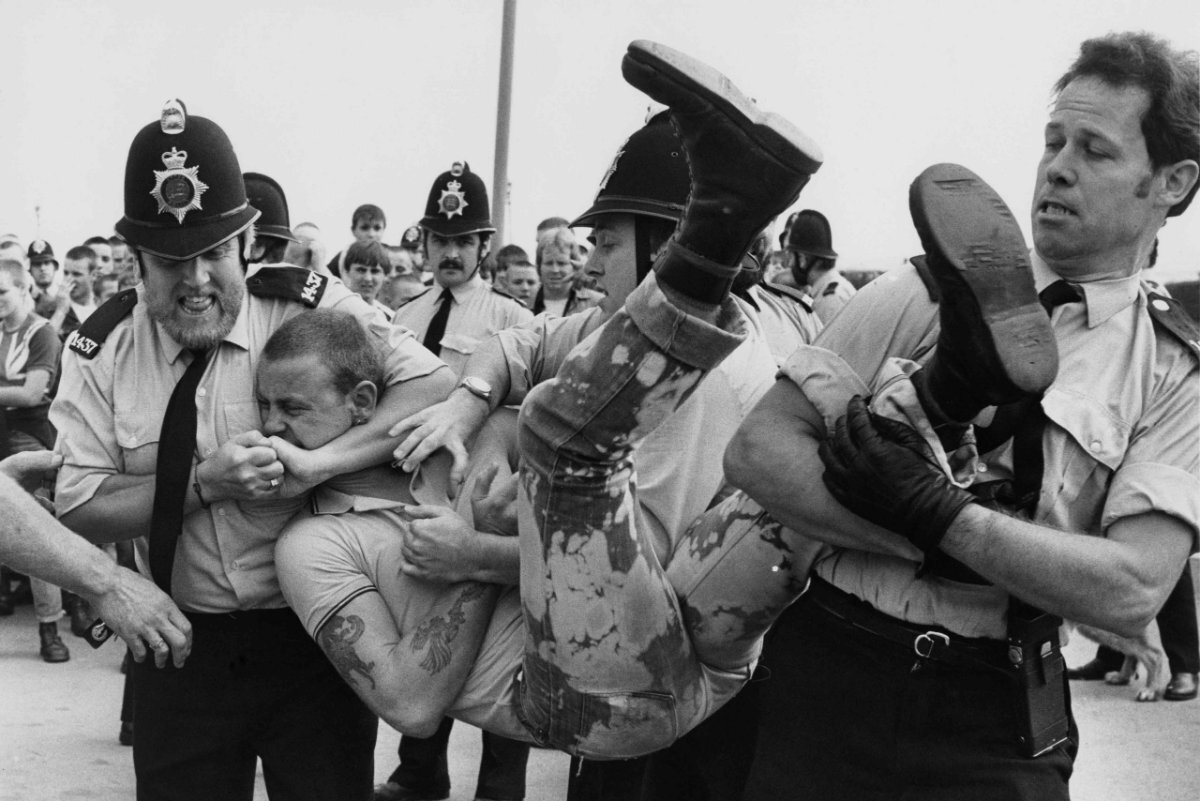
OI EVERYONE! I'm writing this post because I know there are some very old skinheads - some who are probably pushing 30 or 40 who have been in the scene long enough to see violence unfold in front of them. But whether you're a new or old skinhead doesn't matter in this because we will all one day get our shit kicked in. Ever since I met other skinheads, I would sometimes hear them tell stories of how one of them almost got their boots stolen from them while held at knife-point, how they nearly got stabbed by a bonehead, getting a bottle smashed on them from behind, and so on. Now I wanna ask you all, have you ever fought someone? Or at least watch a fight at a show/ gig in real life? DON'T GET ANY WRONG IDEAS, SICKO! Before any of you think that I'm some sick **** who gets off from watching violence, I'd just like to say I don't condone any of that at all. I don't think anyone should get beaten nearly to death at a gig/show because they had different political opinions or they called you something mean or whatever. I just want to know about other people's experience in this subject because of my morbid curiosity.
-
It's okay OP, I'm sometimes lurking in the shadows of this forum site too
-
im here too, forum is different from social media, quite agree with @ Belon maybe the skinhead scene is not like when it at peak, most of us are adult and have our own life and seldomly use the internet, because we are busy with life and most of my crew always meet each other in real life, drinking and eating at the cafe.
-
nice to see words from someone else! For the first time 😉 Sometimes a lot of anonymous "guests" are here looking at different things. How are we supposed to connect if its just anonymus spies on here? Maybe its better if that was not possible.
-
yeah im here, maybe alot of skinhead now is not active in forum or on the net anymore, admin will have their name color, it's user that not register is what u see,u can promote the site if u want more user online, i've been doing that on instagram and facebook, and u need to know something, we are scatter all around the world, so maybe when u online other user are in other region, maybe they are sleeping or working etc.
-
Every time i log in here (every day) I see a couple of anonymous "guests". Thats it - and I guess those are all admins. So my question now is: is any real users actually ever logged in on here? I am here as I want to get to know other skinheads out there in the world. But this site seems.... rather.... empty?
-
 Skinnbollen changed their profile photo
 -
Swedish skinhead here. Usually the only one logged in together with 2 anonymous "guests"....


.png)